Case study · Industrial property
One portal for every lease, bill and repair.
Rent sheets, scanned leases and maintenance notes lived in separate files. We replaced them with one portal that the owners, accounts and site teams all work from.
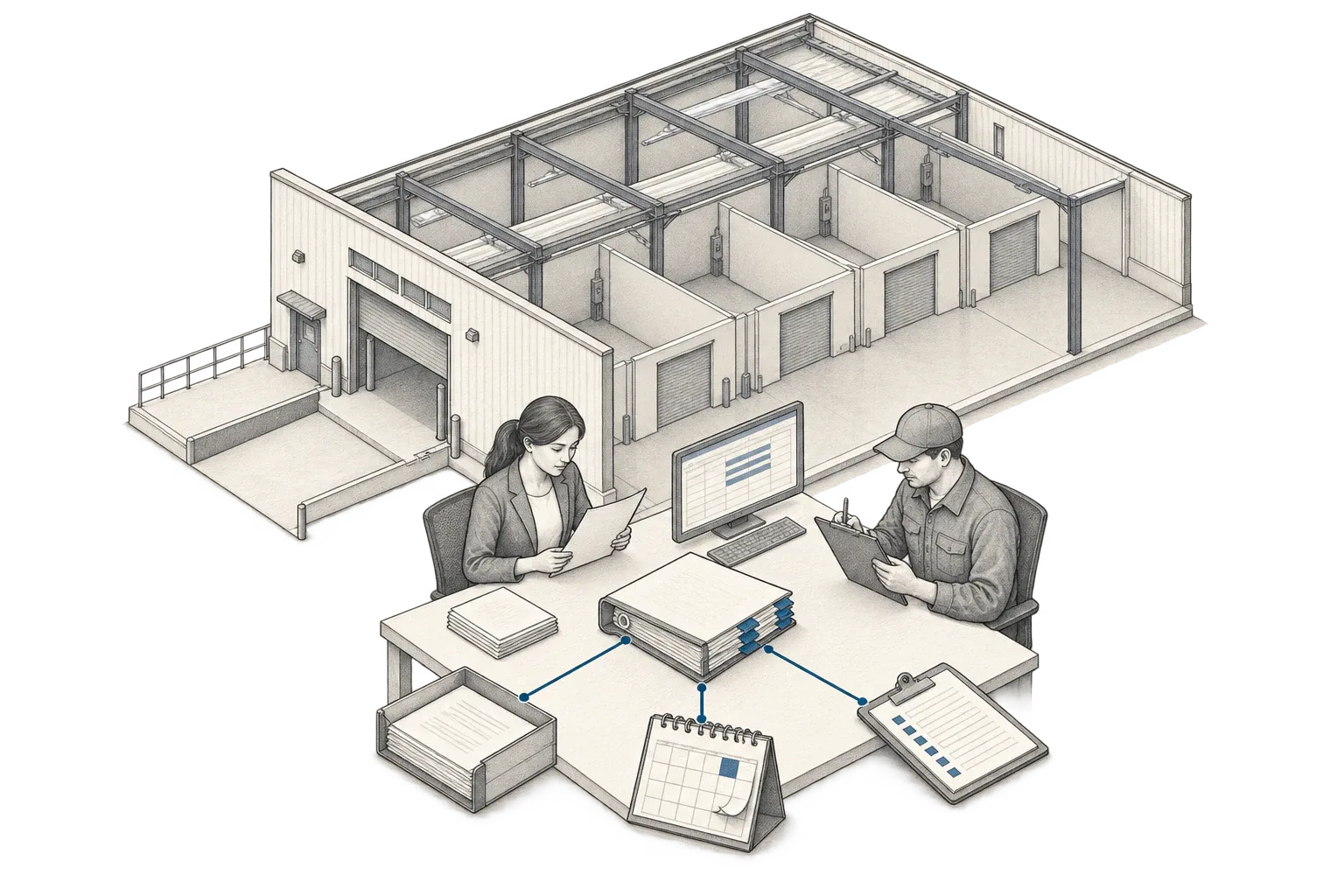
- Client
- Warehouse portfolio operator
- Built by CalQuity
- Warehouse and tenant portal
- Used by
- Owners, accounts and site teams
The problem
The portfolio was spread across files.
Rent sheets held the numbers. Scanned leases held the terms. Whenever something changed, someone had to check every file to keep them in line.
Terms could drift.
Lease terms were copied between spreadsheet tabs, so a change in one place could leave another out of date.
Dates needed chasing.
Renewals and rent increases depended on someone spotting the date. The deposit held could fall short of what the new rent required.
Upkeep sat apart.
Certificate renewals, scheduled servicing and repairs were tracked separately, with no shared list of what was due or who was responsible.
CalQuity solution
One record, connected to the work.
We built the portal around how landlord, property, tenant and lease relate to each other. The team records each fact once, and billing, balances and follow-up all draw from the same record.
Record the facts
- Lease terms
- Rent & receipts
- Site updates
One shared record
Warehouse portfolioLinked by property, tenant
and lease
Put them to work
- Billing & collectionsCharges, receipts, balances
- Deposits & deadlinesTop-ups, rent reviews, renewals
- Property upkeepCertificates, servicing, repairs
Billing starts with the lease. The accounts team generates monthly bills from the recorded terms, tracks receipts and sees what is still outstanding. An issued invoice keeps its original details, even if the lease record changes later.
Each team keeps its own part. Accounts manages collections, site staff update maintenance and compliance, and administrators manage the master records and who has access. Permissions hold those boundaries in place, and every change is logged.
From records to action
See what needs attention next.
A rent increase changes more than next month's bill. It can also raise the deposit the lease requires. The portal links the two and flags any shortfall for review.
- LeaseUnit ARent increase approachingReview lease
Review the recorded escalation date.
- DepositUnit BDeposit below the required amountCheck top-up
Compare the amount held with the revised rent.
- MaintenanceUnit CScheduled service coming dueReview service
Check the asset, due date and responsibility.
A rent change can also raise the deposit required. The difference becomes a follow-up item.
What changed
Less re-entry. Clearer follow-up.
The team now runs the portfolio from one place, from the monthly billing cycle to the next service visit.
- Monthly bills come from the lease records, with any missing rent flagged before billing.
- Outstanding collections and deposit gaps are visible without assembling separate sheets.
- Renewals, rent reviews and scheduled upkeep sit on one action list.
- Each team edits only its own records, and the history of every change is kept.
Client name withheld. The diagrams simplify the delivered workflow, and the portal view uses illustrative records.
Start with the context
What is your team tracking by hand?
Walk us through the records, checks and follow-ups behind the work. We will help you identify what a shared system could take off your team's plate.