CalQuity LabsBook a discovery call

SLMs & local models

Run AI on servers you control.

Can you use AI without your data leaving the building? Often, yes. We select, adapt and deploy small language models on your own servers or devices, and test speed and cost at your real volume.

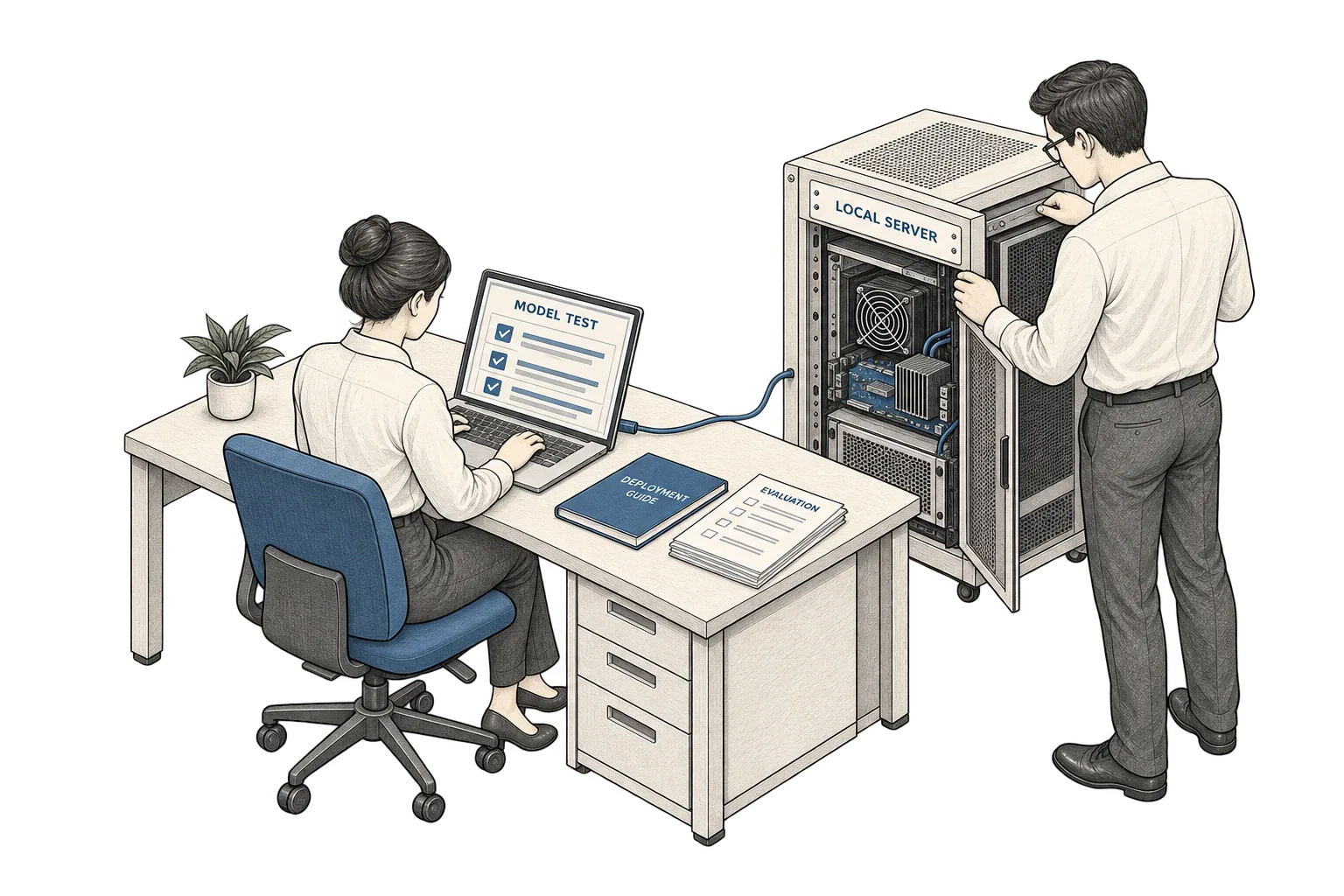
Isometric drawing of engineers testing a model on a laptop connected to a local server, beside deployment and evaluation documents.

A sample run

Route requests on your own server.

A small model on your own server reads each incoming request and picks the queue. When it isn’t sure, a person decides.

Sample · Request routing on a company server

Request

Customer email · 10:14

The cold-room compressor at our Pune site has been tripping since last night.

Router · to service desk

Routed REQ-30418 to Refrigeration, Pune as high priority: equipment fault at a customer site.

Checked against

ModelAdapted for routing
Small model · v3
Runs onCompany data centre
srv-ai-02
Outbound accessFirewall rule
Blocked
Routing rulesService desk
14 queues
  • Processed on the company serverPassed
  • Confidence above the agreed thresholdPassed
  • Queue exists in the routing rulesPassed

Result

REQ-30418Routed

Refrigeration · Pune

Queue
Refrigeration, Pune
Priority
High
Reason
Equipment fault
Data sent outside
None

Logged on srv-ai-02 · no external calls

Sample data. Names and figures are illustrative, not from a client.

What it handles

Where a local model earns its place.

Your team agrees the quality threshold, data boundary and review rules. A local model is not automatically faster, cheaper or private: we test the complete system and include updates, monitoring and maintenance in the operating plan.

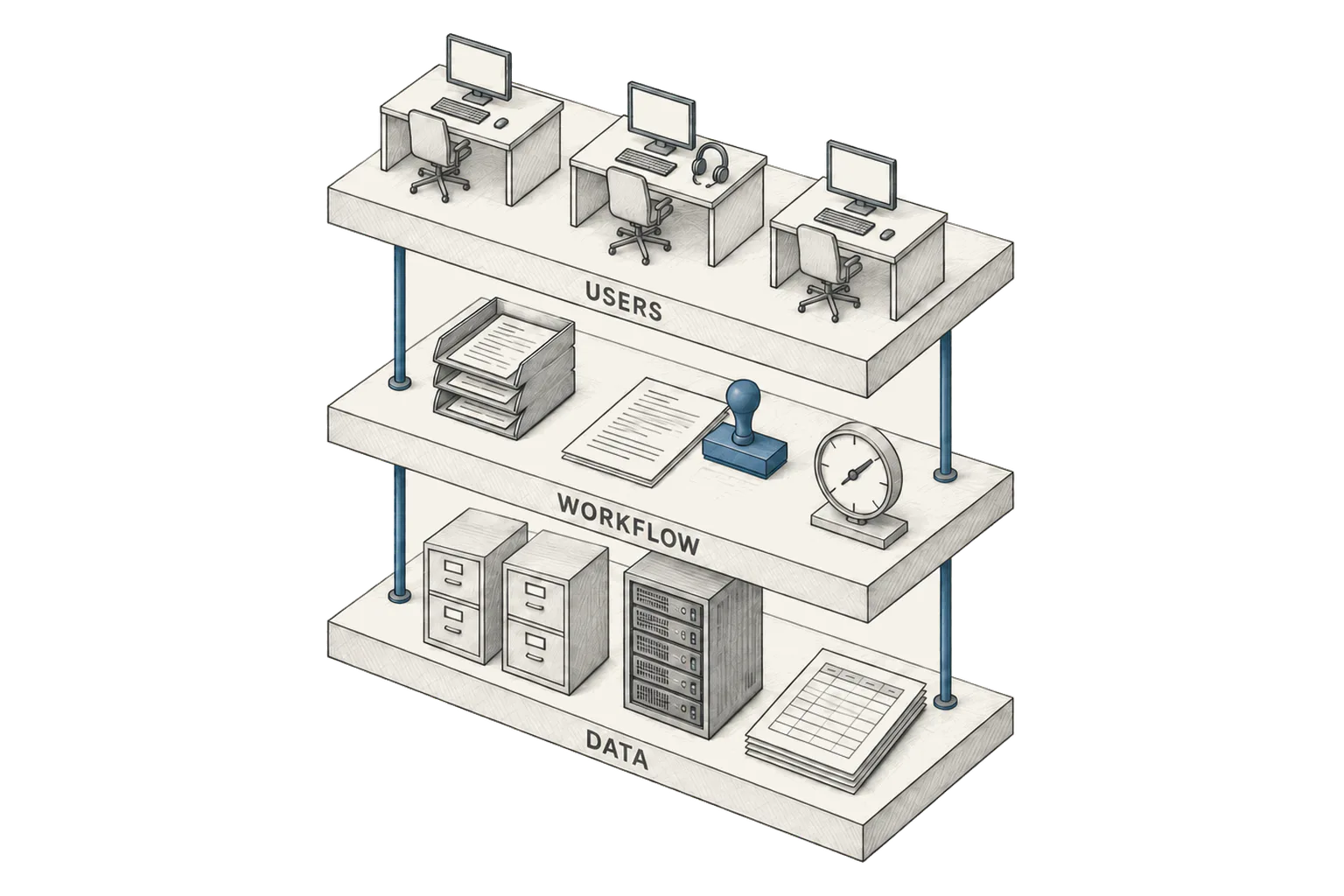
Exploded isometric drawing of three layers labelled DATA, WORKFLOW and USERS, joined by connecting rods, with a review stamp in the workflow layer.

Work on data that can’t leave.

Classify text, extract agreed fields or draft summaries inside infrastructure you control. We trace the whole data path, including retrieval, application logs and updates, not only the model.

It does
Runs the task where the data already lives
You approve
The data boundary and which outbound connections exist
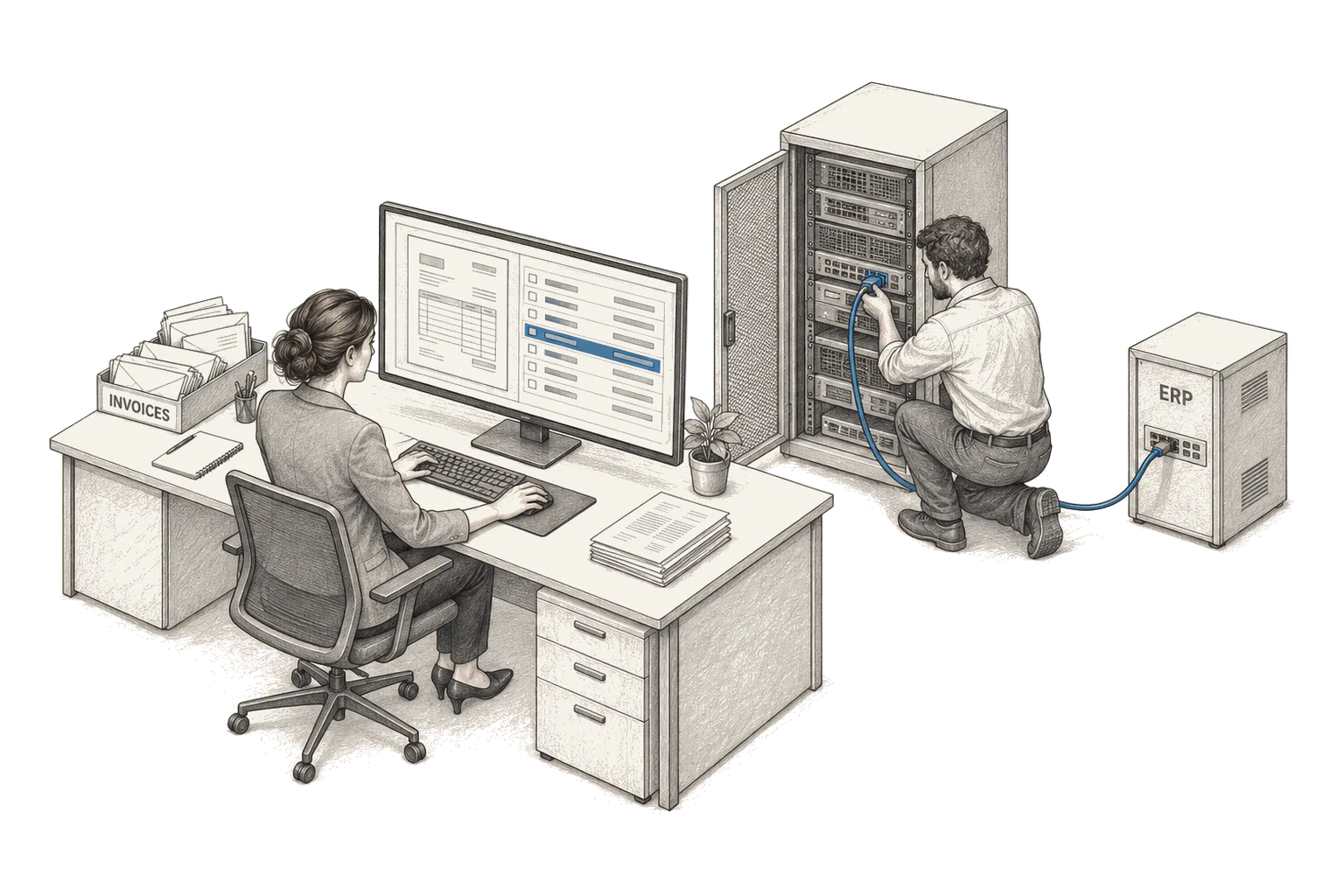
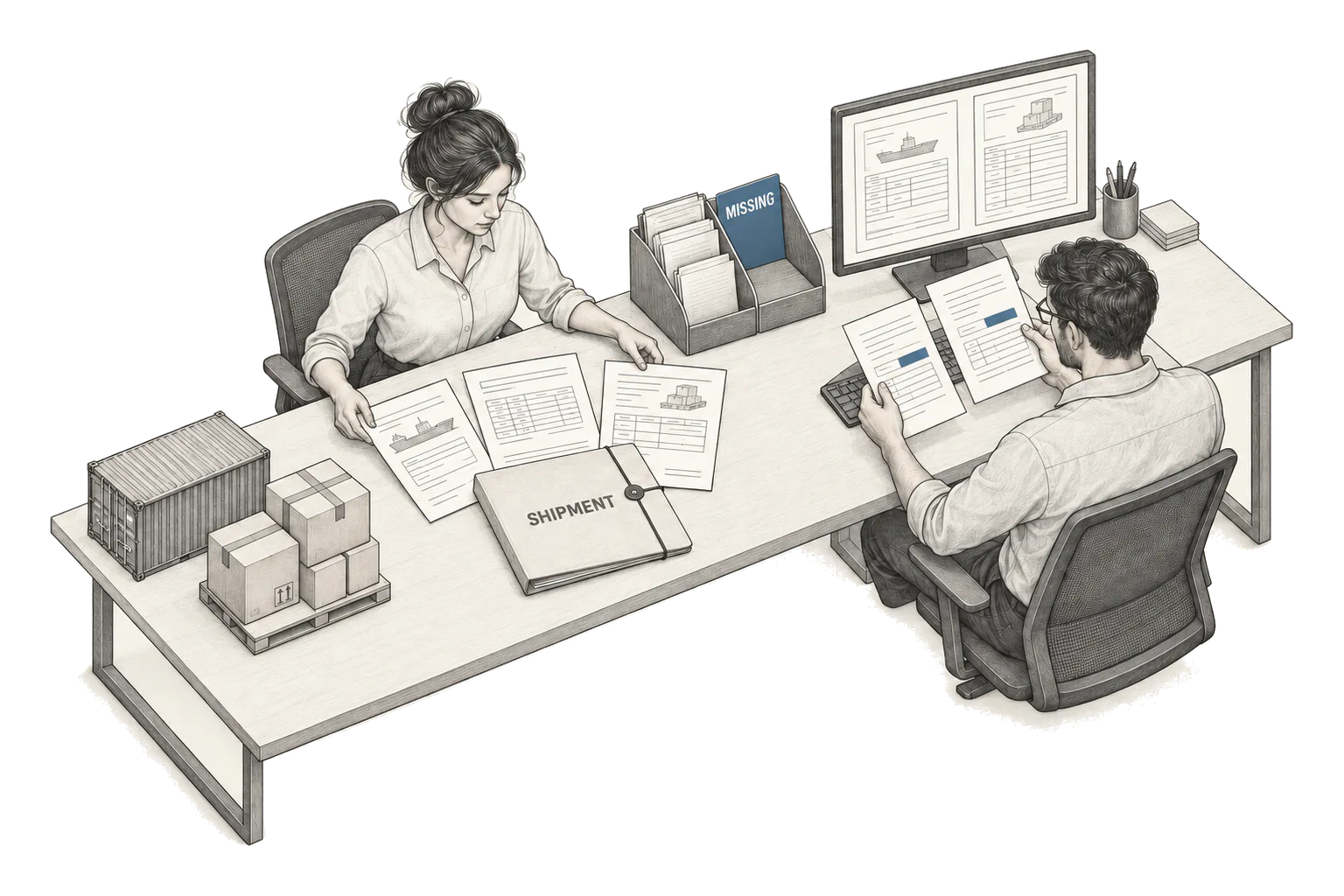
Isometric drawing of an accounts payable manager reviewing an invoice queue while an IT administrator connects a cable to a cabinet labelled ERP.

Repeated tasks at steady volume.

A smaller model on a defined job, such as routing requests or preparing short drafts, can cost less than paying per call. We compare both at your volume before recommending either.

It does
Handles the agreed task within its quality threshold
You approve
Whether the trial numbers justify a rollout
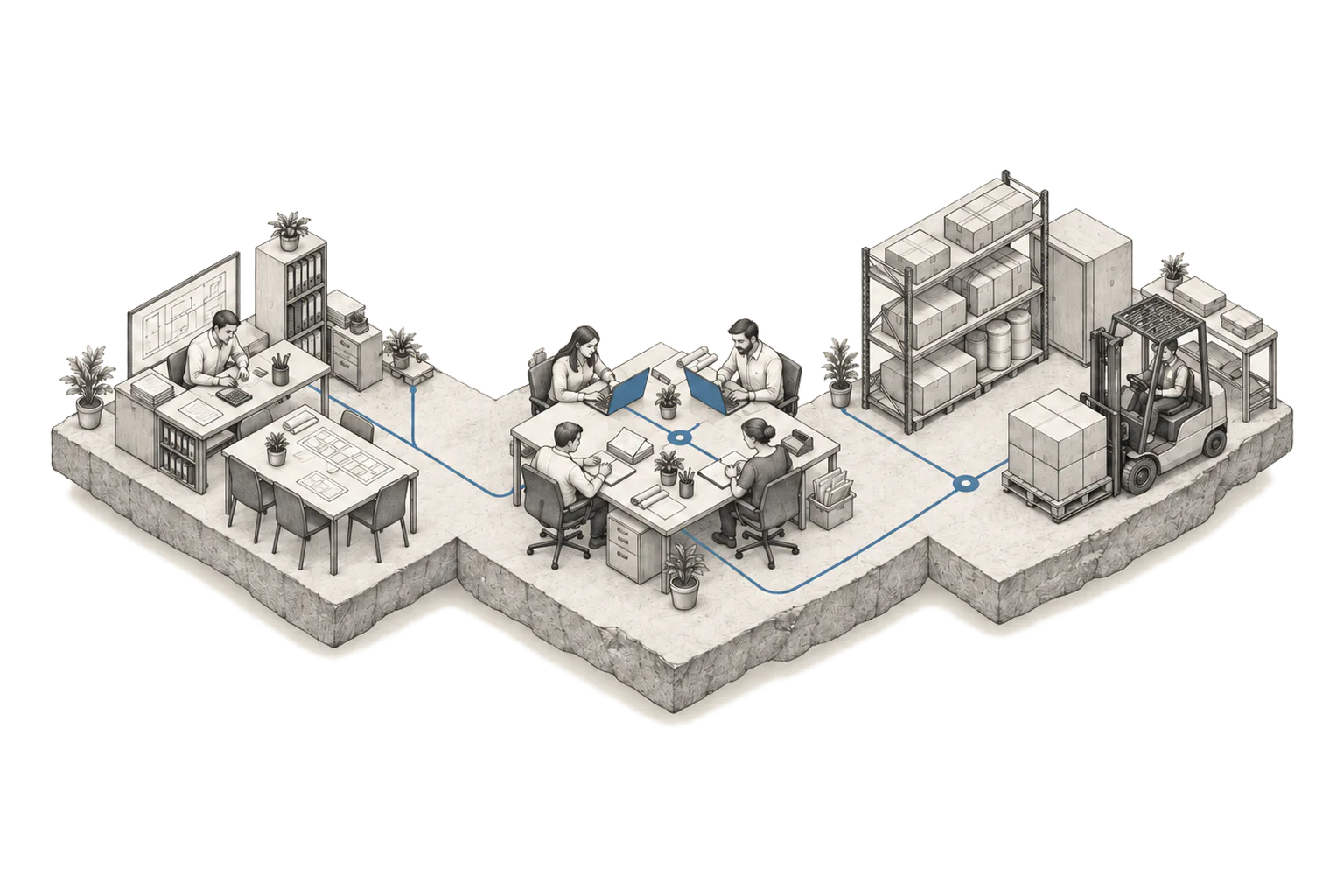
Isometric drawing of an engineering team working at a desk between a business office and a warehouse corner, with a workflow line connecting all three.

Sites with weak connectivity.

Suitable tasks can run on a local server or device at the site. For true offline use, the application, its data and its dependencies have to work without external services too.

It does
Keeps working when the connection drops
You approve
Which tasks run on site and how updates arrive

How it works

From a workload to a local deployment.

A small language model (SLM) is a compact language model that needs less memory and compute than a larger one. Local describes where it runs. We choose model size and deployment together, based on the task, data constraints and available hardware.

  1. 01

    Define the workload

    Agree the task, representative inputs, quality threshold, expected volume and where data may travel. Review the hardware available.

  2. 02

    Select and adapt

    Compare suitable existing models and their licences. Test prompts, retrieval or fine-tuning where needed, using data your company is allowed to use.

  3. 03

    Test on target hardware

    Measure accuracy, response time, throughput and full operating cost at expected load. Include difficult inputs, peak demand and human correction.

  4. 04

    Deploy and operate

    Integrate the local model with your application. Configure access, logs, monitoring and updates; agree rollback, recovery and ongoing ownership with IT.

Prove the fit before you scale.

Accuracy and correction rate
Scored against a labelled sample of your own inputs, including the difficult ones, and tracked by how often staff correct the output.
Response time under load
Measured on the target hardware at expected and peak volume, not on a benchmark machine.
Cost per accepted task
Hardware, power, maintenance and review time, divided by the outputs that pass review, compared with hosted inference.
Data flows and access
Outbound connections, logs and permissions checked with IT before rollout, and again after updates.

Your next step

Which workload should run on your infrastructure?

Bring a recurring AI task, sample inputs, expected volume and any hardware or data restrictions. We’ll assess whether a local model fits and what a useful trial needs to establish.

or email us directly athello@calquity.com