 Ask a research question, get an answer built from your own filings, reports and notes.Explore this system
 Private AI and internal knowledge
Your knowledge, kept in-house.
Staff ask your own documents and get sourced answers, inside your network and permissions.
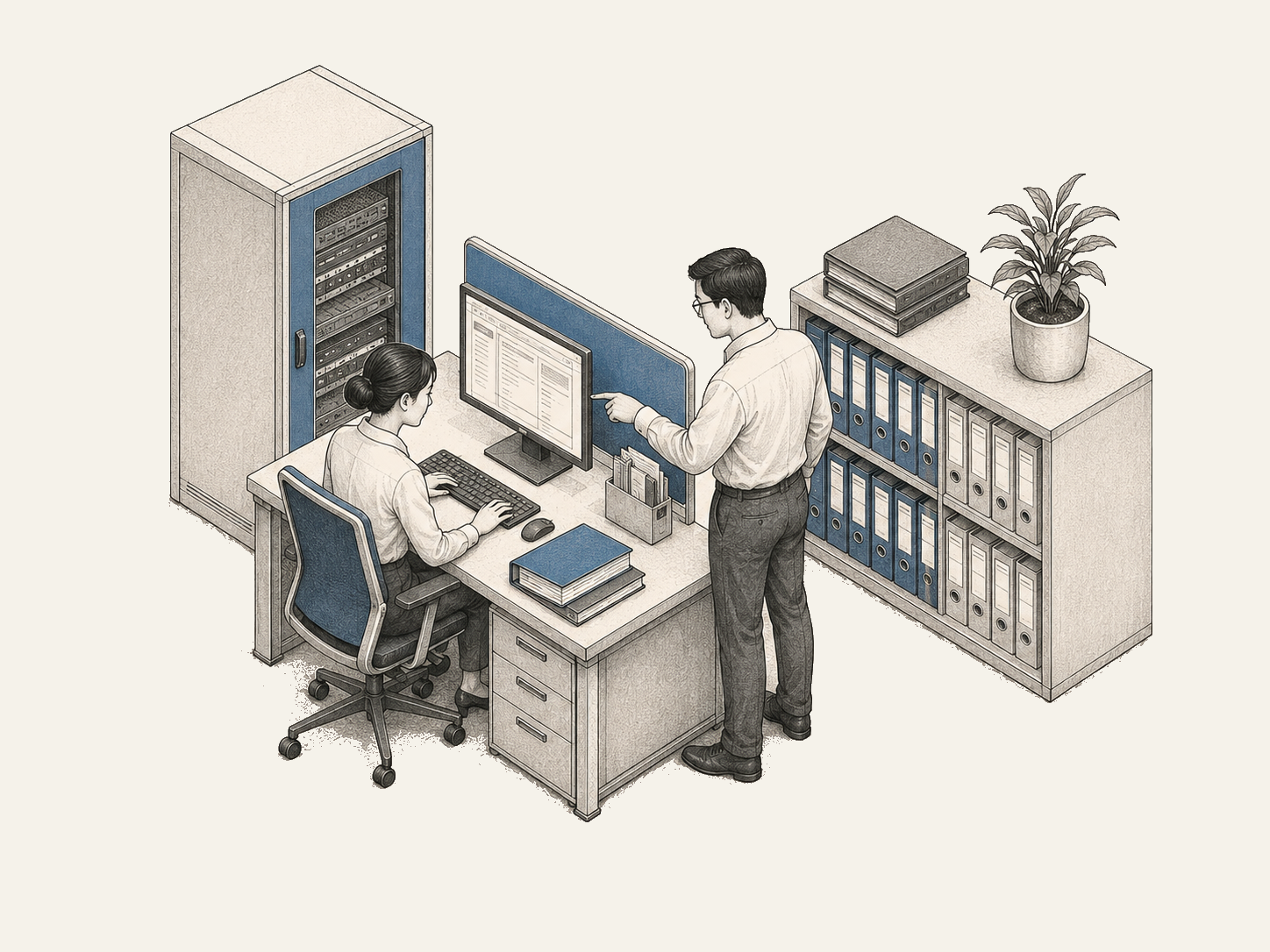
Circulars, SOPs, past cases and project files hold the answers, but few people know where. The system answers from that material, shows the document, page and date, and returns only what the asker may already read. It can run on your own servers, so nothing leaves the building.
Illustrative example
What this could look like in practice
A bank's operations staff need answers spread across internal circulars, product notes and old audit responses. Branch operations asks what the current rule is for a customer document, and gets the circular number, its date, and a note that an earlier one was superseded. A credit officer sees only files their role covers, not even a line from another vertical. It all runs in the bank's own data centre.
How the system helps
The work it takes off your team
- Answers from your documents, with file, page and date shown.
- Applies your existing permissions exactly, source system by source system.
- Runs on your servers, with no outside call while answering.
- One place for internal assistants, instead of scattered consumer tools.
Considerations
Things to settle before building
- Permission mapping is the bulk of the work, role changes included.
- Restricted material must never appear, not even inside a summary.
- On-premise means hardware, power and someone to run it.
Outcome measures
Useful things to measure
Suggested yardsticks for judging whether a system like this is earning its place — not results we promise.
- Answers carrying a usable citation
- Correct refusals on permission tests
- Time spent hunting for documents
- Wrong answers reported monthly
Where it applies
Sectors where this fits
Banks, insurers and financial institutions · Hospitals and health systems · Legal, audit and compliance functions · Government departments and defence organisations needing classification-aware, on-premise handling
Other systems
Explore what else we build.
Ask a research question, get an answer built from your own filings, reports and notes.Explore this system  Read leases, invoices and GRNs into fields a person confirms before your ERP acts.Explore this system
  Answer the calls that have one clear answer, hand the rest over with full context.Explore this system
  One status per consignment, and a flag on the ones that will miss.Explore this system
  Check finished goods and site safety on the cameras you already have.Explore this system