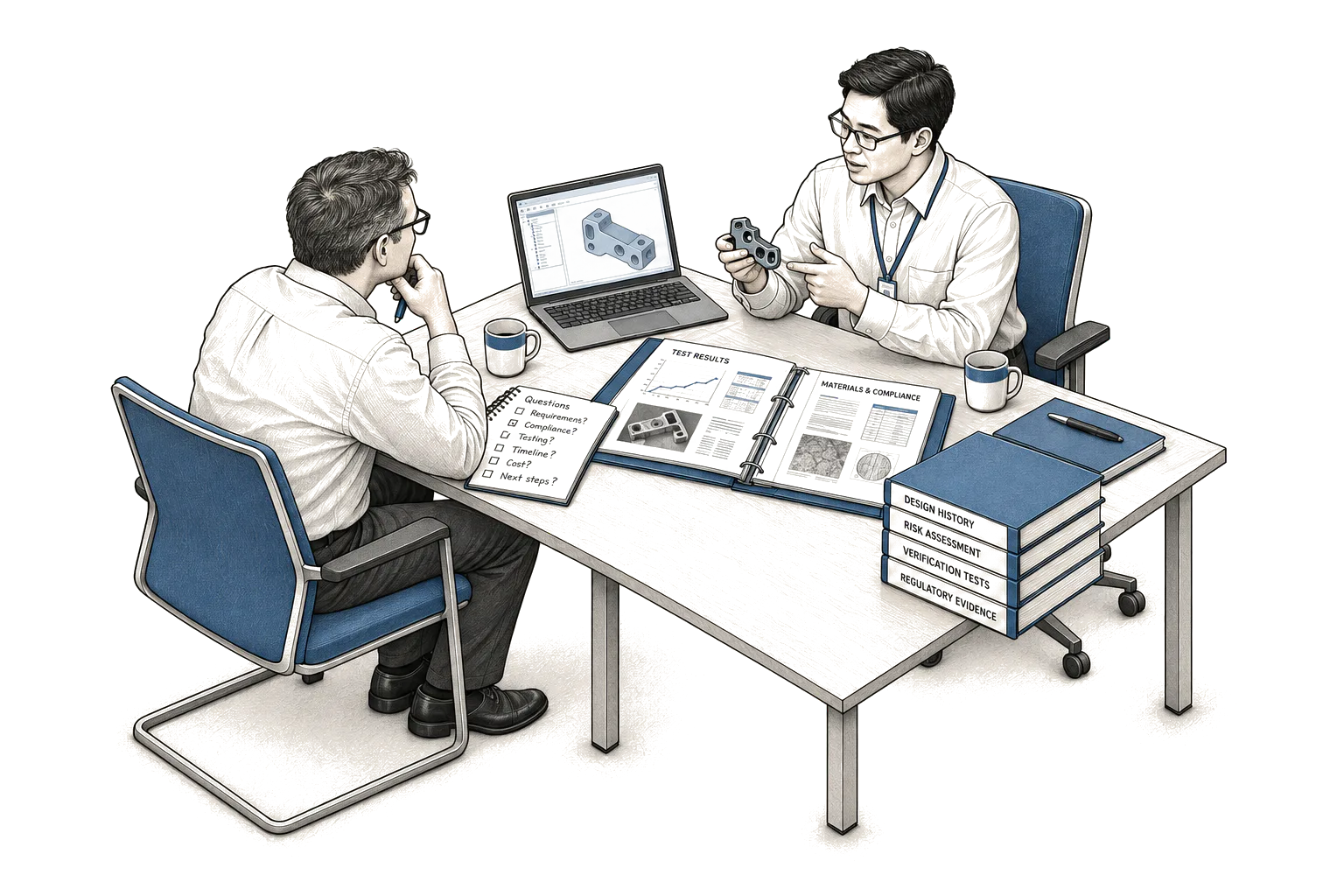
What to ask in the first meeting
Ask who owns a miss, who sits with your desk, and what they do with a goods receipt no clerk can match.
You do not need an engineer in the room. You need answers you can test against your own week. Take the list below. Write the names they give. If a reply has no person, no document, and no desk, stop them and write "no name."
If someone technical will join later, send them how to assess production evidence. That post is the version for the person you will forward it to. This one is for the person who runs the work.
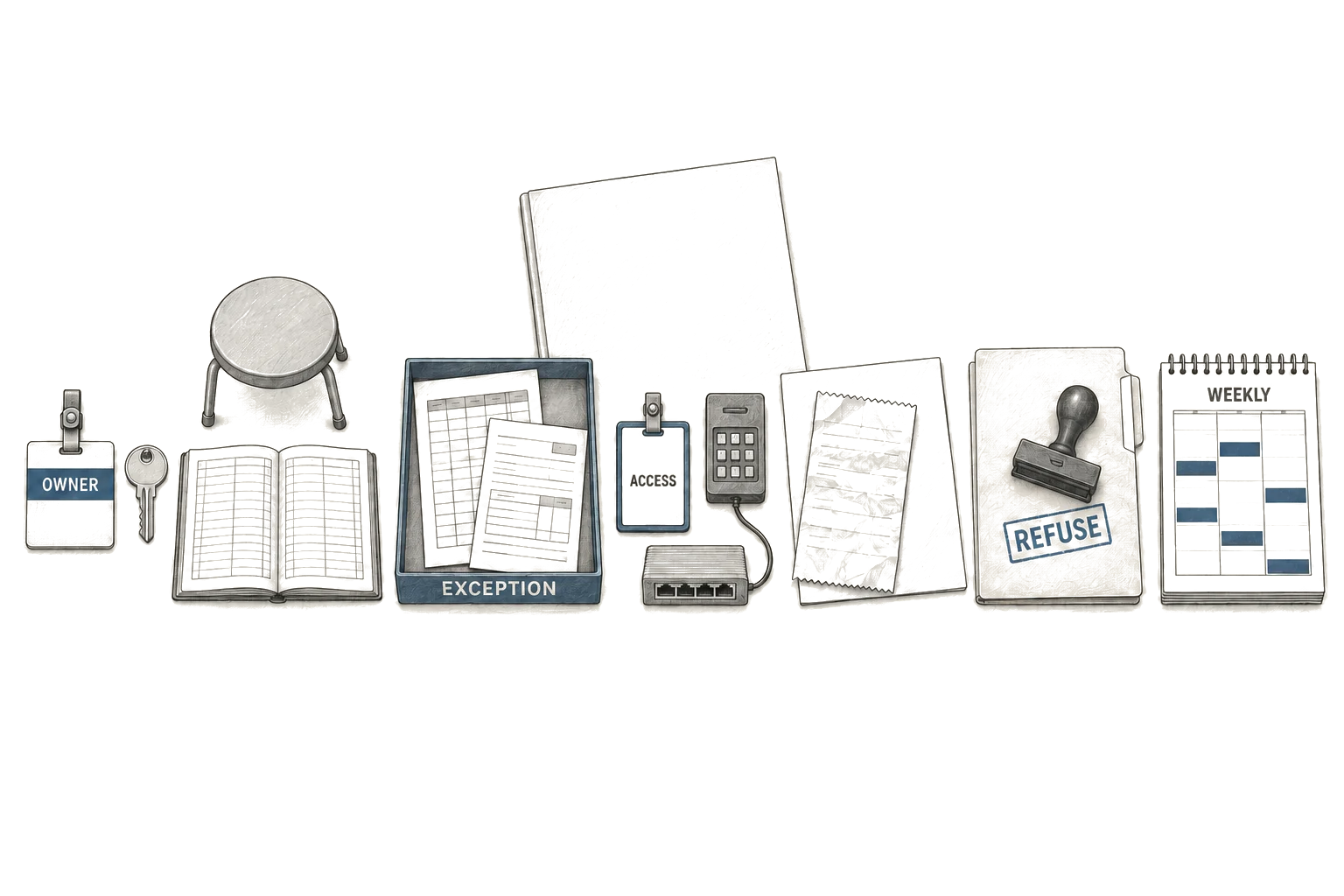
The seven questions
1. Who owns the work when this is wrong on a live Tuesday
A good answer names a person and a time. The leasing manager still signs the lease rider. Their person sits with yours until the miss is closed. They say who you call when the front desk is still open at nine in the evening. They say who answers.
A bad answer hides behind "we watch quality." No named owner. No desk that takes the call. The miss lands on your people while they "look into it." You still have the tenant, the driver, or the clerk in front of you.
2. Whose week do you sit in for the first month
A good answer names a role in your building. The dispatcher. The clerk who keys the goods receipt. They will watch a real shift, not a slide session with managers. They will write down the exceptions, meaning the cases your people already handle by hand when the record does not fit.
A bad answer hides a remote start. They want a workshop with department heads only. Your people never see them until the week you go live. Then the first ugly document is your problem.
3. What happens when the document does not match the system
A good answer walks one document you already use. The transporter's evening spreadsheet does not match the goods receipt. They say who sees the mismatch. They say who holds the load. They say who writes the note in your records, and in which field.
A bad answer hides a confident fill-in. The system completes the gap. Your clerk finds it two days later on a call. Nobody can say which line was made up. The driver is already gone.
4. What access do you need from people I do not manage
A good answer lists people you must bring. Security. IT. The person who owns the connection to your ERP. They say what those people must approve before a record leaves the building. They say it in this meeting, not after you have promised your team a start date.
A bad answer hides a surprise. "We only need a login." Then procurement and security arrive once your dispatcher is already in the work. You cannot grant what they now want. The project sits while your people wait.
5. Show me this on my records, not on yours
A good answer asks for a sample you already hold. A week of goods receipts. A stack of lease riders. They say what they will hand back: which cases they would send to a person, and in one sentence why. They will do this before anyone talks about a contract.
A bad answer hides a demo with clean files. Every case works. Nothing looks like your Tuesday. They will "adjust it later" on your live desk. Later is when the leasing manager is already using it with a tenant in the room.
6. What will you refuse to take on
A good answer names work they will not touch. They will not replace the leasing manager's judgement on a non-standard rider. They will not run on-premise, meaning on infrastructure in your building, if your security has not signed that path. Refusal is how you know they looked at your week.
A bad answer hides "we can do all of it." If they will not refuse a job, they have not sat with the dispatcher or the front desk. They are selling a shape that fits any floor. Yours will not fit it.
7. After we go live, whose time does this eat every week
A good answer names work on your people. Who reviews the cases sent back. Who changes the instruction when a new lease rider appears. Who sits with the next clerk on their first week. They say this as a load on named roles, not as a promise that the system "runs itself."
A bad answer hides the check your people still do. Your dispatcher still opens every load. Your front desk still reads every letter before it goes out. Nobody put that time on the calendar. The saving you were sold is the hour they moved onto your desk.
How to use this in the room
Print the seven questions. Leave a blank line under each for the name, the document, and the desk they give.
Ask them in this order. Do not skip the refuse question. Do not skip the Tuesday-miss question. Those two are where a smooth talker usually stalls.
Do not score them. A score lets a polished story beat a named owner. Write "no name" and keep going. After the meeting, send only the notes, not a rating.
The follow-up for someone technical is what delivery evidence to request. Send it only after this meeting. Do not let that post replace the seven questions. It is for the person who can check the build. It is not for the person who runs the desk.
What this does not solve
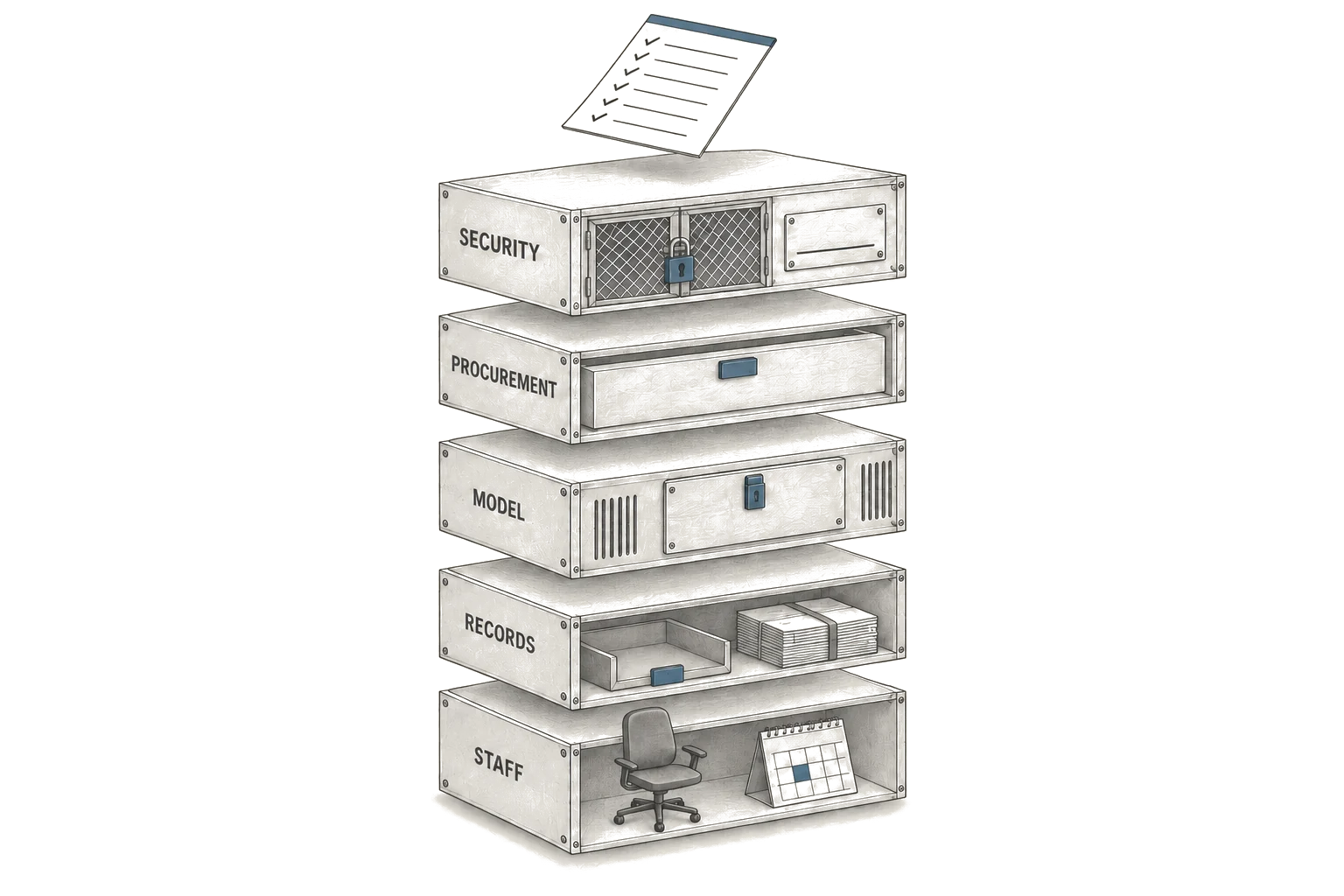
This list will not get you security sign-off. It will not move procurement. It will not tell you whether the underlying model, meaning the software that writes the next line of text, is fit for your records.
IT still has to see the connection. You still have to give a week of real goods receipts or lease riders. You still have to free the dispatcher or the leasing manager for the first month. If you cannot free that person, do not start. The meeting will sound fine. The work will not change.
This also will not settle a fight with a vendor who answers well and then sends a different team. You still have to hold them to the names in your notes. If those people do not appear, you stop. The list does not enforce itself.
What it will demand of you
You must bring one live document to the meeting. You must name the person who owns a miss today, before they walk in. You must say who you can pull into a later hour with IT and security.
You must write their answers in the room. Memory after the meeting is how a bad answer survives. The only action with no engineer present is this: ask the seven, write the names, and refuse to proceed on a reply that has none.