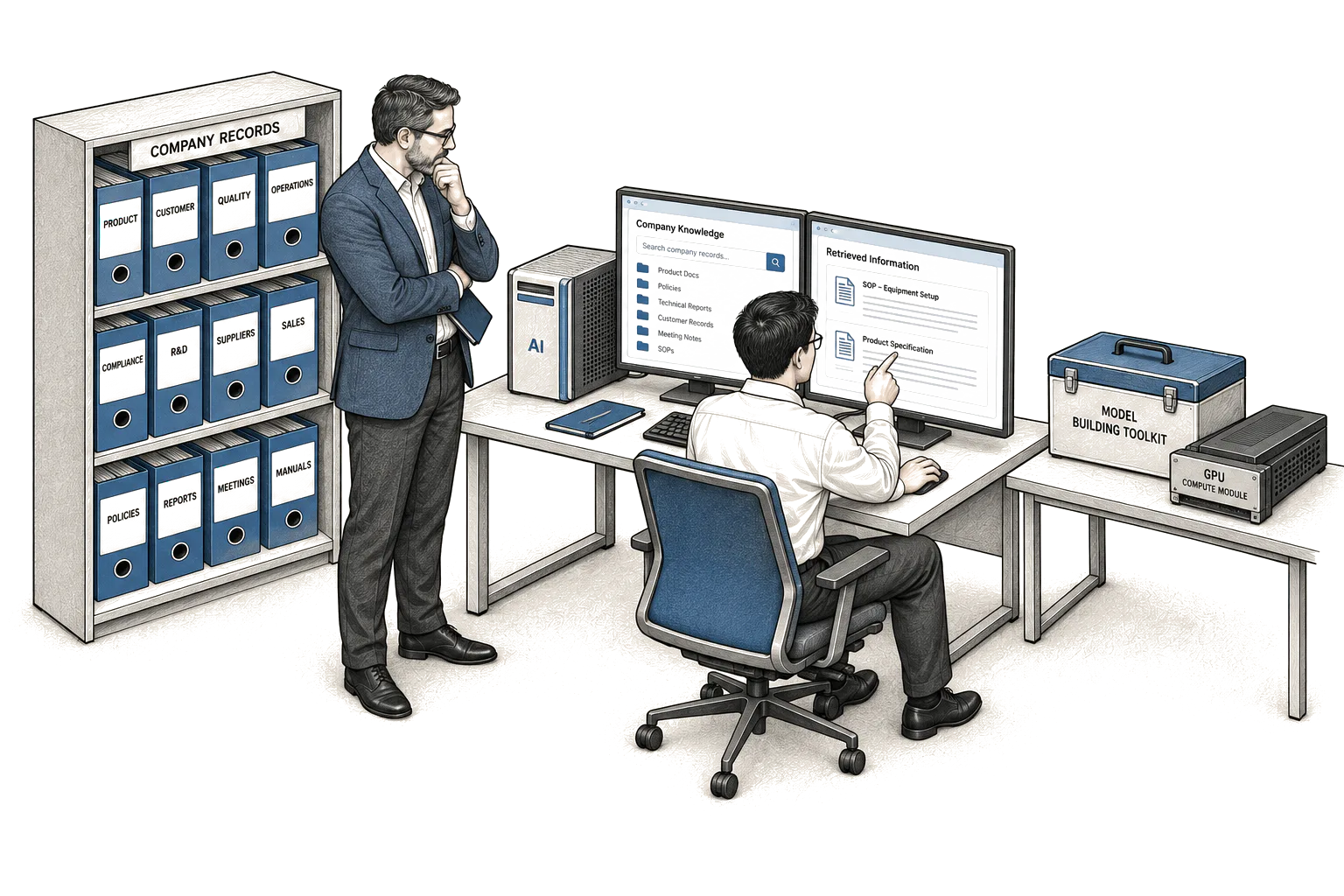
Start by testing an existing model with approved source documents. Consider custom training when a specific requirement remains unmet and you can measure whether training improves it.
Start with the task and the evidence
If fixed rules can do the job, ordinary software may be enough. If the problem is finding evidence across scattered files, test retrieval before custom training. A dispatcher may need a goods receipt, or a leasing manager the current lease clause. Training a model does not remove the need to connect those live sources. See when a business should use AI for the broader decision.
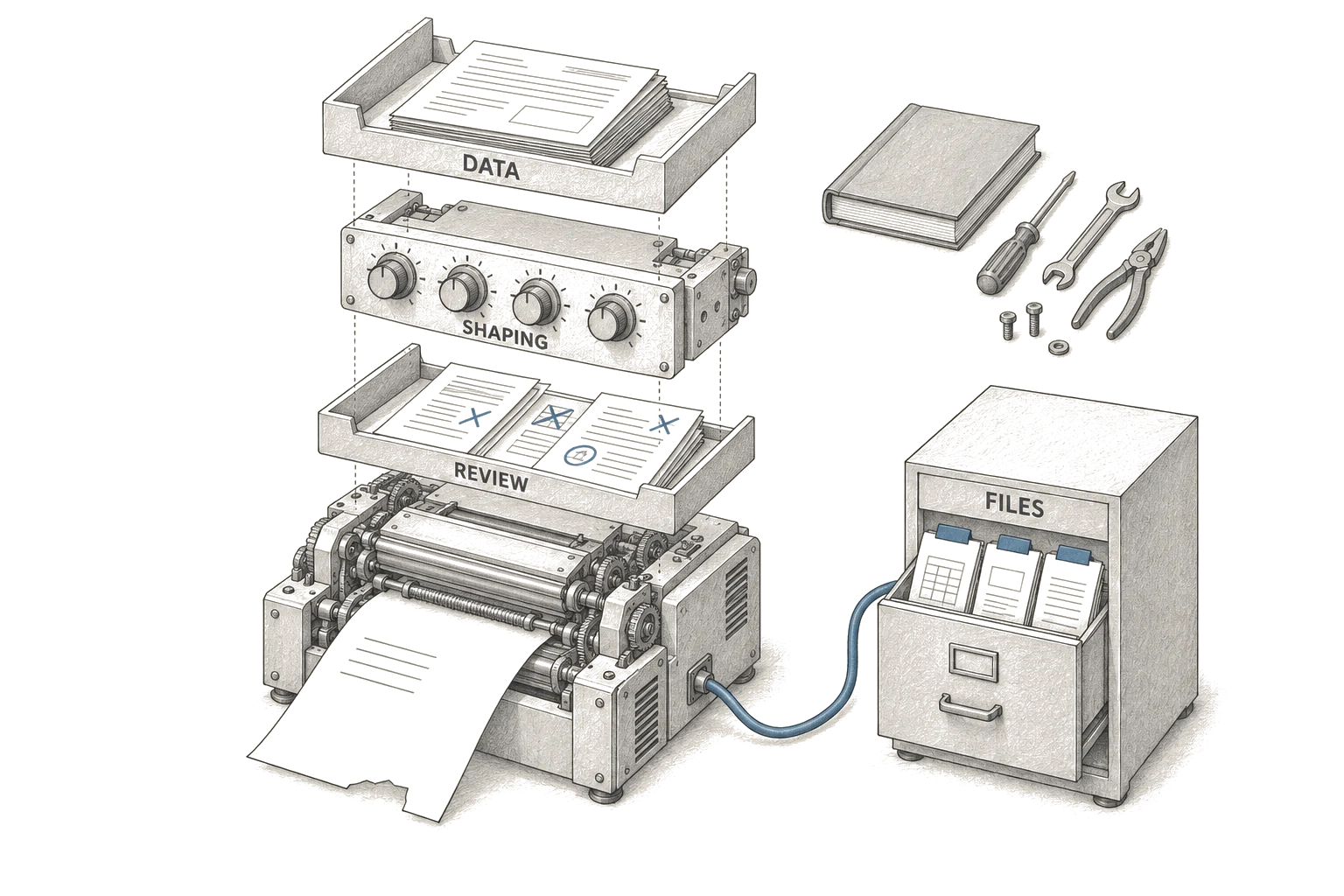
What custom training involves
Custom training requires suitable data, permission to use it, evaluation cases and a process for maintaining the result. It can change model behaviour, but it does not make yesterday’s records current. A trained model still needs a reliable way to retrieve today’s goods receipt or the latest lease rider. Include that integration and review effort in the comparison.
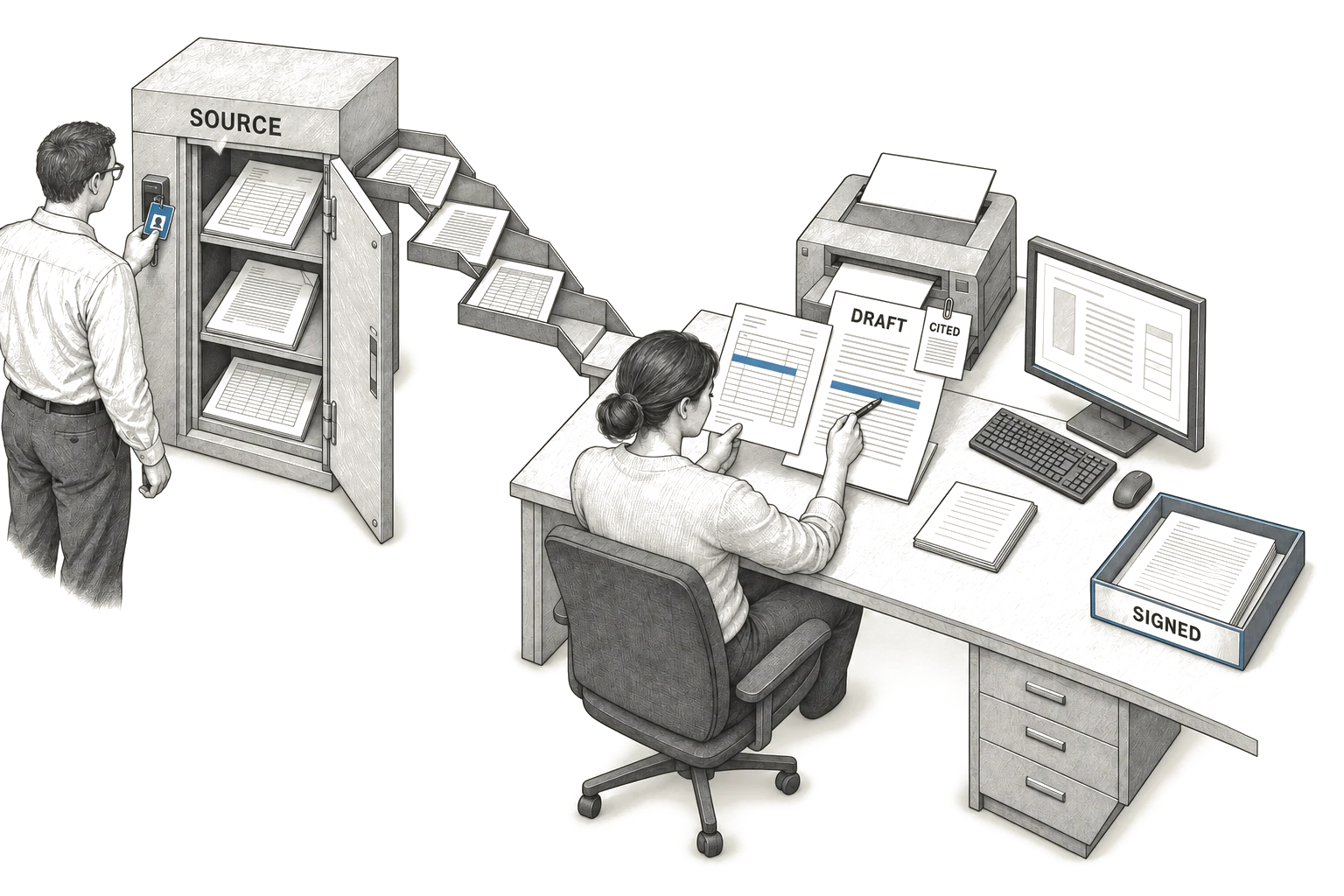
What joined records mean instead
A retrieval workflow selects relevant passages from approved sources and gives them to a model at answer time. Staff can check the draft against those sources. The design may include indexed copies, so storage, deletion and access permissions must be implemented and tested. Drafting an answer should not itself change a business record; any write action needs its own authority and approval rules.
Check the service terms
Published pages for a common shared service say the service claims no ownership of customer information put into it. See the published pages (1) (accessed 2026-09-09). The point for you is plain. Your records can stay yours while a shared system reads them. You do not need to build from scratch to keep ownership.
Where the months and money go
Compare the work required by each approach: source preparation, integration, evaluation, review and ongoing maintenance. Custom training adds data preparation and training work. Retrieval adds indexing and source-refresh work. Test whether either approach improves accepted answers enough to justify its full operating cost.
Poor files hurt both paths in the same way. A missing lease rider hurts a joined setup. It also hurts a from-scratch build. A wrong row in the evening spreadsheet will mislead either path. A stale link to your ERP will starve either path. The fix is the same. Name the source of truth for each answer. Give each source an owner. Set dates for review. A joined setup shows which page failed.
What this does not solve and what it asks of you
This does not fix thin records. If the lease rider is missing, no system can infer the fee. If drivers call in loads by voice and no one logs them, no lookup can find them. If two sheets both claim to be truth, software cannot choose for you. This does not grant rights you lack. If staff should not see pay files, the system must not show them. If a record cannot leave your building by pact or law, you must honor that bar. This does not take blame for a wrong send. If the system made something up and staff passed it on, the harm still sits with your shop.
It will ask for steady work from you. You must name who owns each source file and who may see it, and clear rights to use past text. You must keep names stable across sheets, log the cases it got wrong each week, and review a sample of answers with cited pages open. You must also tell tenants, drivers, and staff when they deal with the system and how to reach a person. None of this needs an engineer at first. All of it needs an owner with time each week.
A check you can run this week
Meet for one hour with the people who run the work. Pick one painful lookup. Use the table to score it. Bring one sample of each source file.
| Ask in the room | What good sounds like |
|---|---|
| Where is the lease rider kept today, and who owns it | One named place, one named owner, date of last check |
| Where is the goods receipt kept, and what makes a row final | One named file, clear sign for final, no twin truths |
| Who may see pay, health, or tenant ID files | Named roles, same rules as today, no widening |
| What proof must each answer show | Cited page or line number, staff sign-off kept on file |
| Which odd cases go straight to a person | Short list, named backup, posted by the desk |
| How will we log the cases it got wrong | One log, weekly review, owner assigned |
If you cannot fill a row, fix the record before buying anything. If you can fill each row, test a joined setup on that one lookup. Keep staff sign-off. Track minutes saved and wrong answers caught. Hold the from-scratch path until joined records fail on a need you can name.