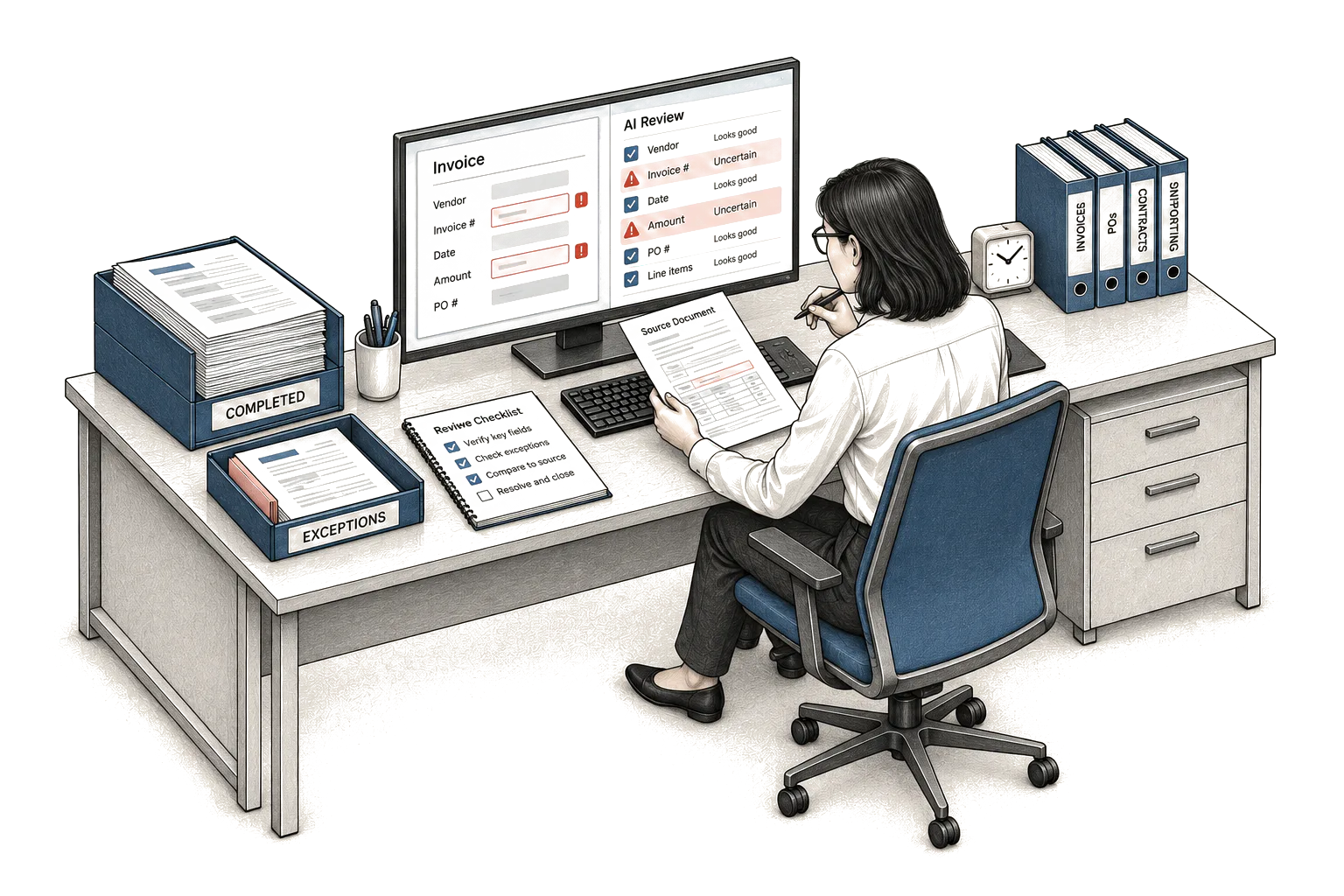
Checking time depends on how much work the system removes and how much review it adds. Reviewing every case can still save time if checking a draft is faster than doing the original task. Measure both on representative cases before deciding which cases can pass without individual review.
Someone always checks
No system runs on its own in a real operation. Someone signs. Someone answers for a miss. Someone faces the customer when a file is wrong. The question is never whether a person checks. The question is which cases get a person and which go through on their own.
Compare total time per accepted case: preparation, review, corrections and sign-off. If that total exceeds the manual baseline, the system has not saved staff time. If it is lower, mandatory review can still be worthwhile.
Larger savings may come from letting well-tested, low-risk cases pass under an agreed approval policy. Your dispatcher starts the day with the transporter's evening spreadsheet already sorted. Your leasing manager finds the lease rider filed with the right dates. Your front desk at nine in the evening hands over a short list of flagged arrivals. People touch the flagged few. They never open the rest.
Think of the goods receipt in your store. Most lines match the order. A few do not. You want a person only on the few. If staff must open every line again to confirm the match, you kept the old job and bought a new chore.
For a broader decision framework, read when a business should use AI.
Where checking time goes
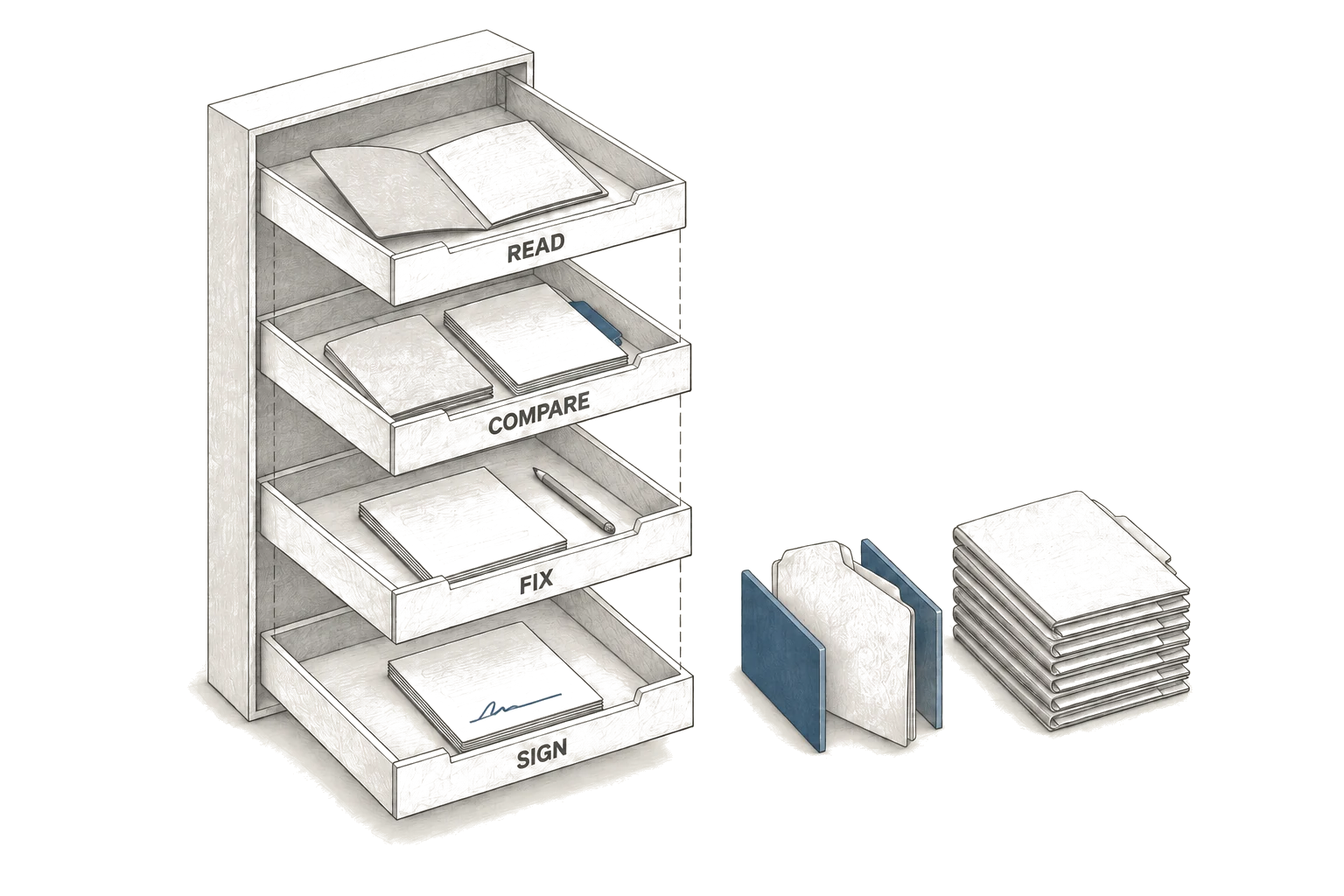
Checking is not one act. It breaks into small jobs, and each one takes minutes from someone you already employ: reading, comparison, fixing, and sign off.
A person opens the case and reads what the system wrote. They pull the source record and match names, dates, and amounts. They correct what is wrong and note why, then record who approved the case so the decision can be traced.
Reading time drops fast when the layout is clear, and comparison time drops when the source record is easy to reach. Fixing time drops too, as long as errors stay contained in one case. Sign off stays. You want a name on risky work.
Trouble starts when errors leak across cases. A wrong address on one delivery becomes three failed drops. A wrong date on one lease rider becomes a month of rent disputes. Contained errors cost a fix. Spread errors cost a week.
Ask where errors stop. Ask who sees the full list of the cases it got wrong each week. If no one owns that list, checking time will grow in silence. Your people will quietly open more cases because trust has slipped.
The pattern for safe handoff is the same one used in support work. The system should hold the thread and pass the full story to the person. Read what an AI support handoff should preserve for the information that should travel with the case.
Questions to ask when no engineer is in the room
Use this list in your next operations meeting. You need no engineer present. For each question, listen for the kind of answer described here.
- Which cases go through with no person looking?
Good answer sounds like this. The vendor names the exact sort. Paid invoices under your sign off limit pass. New vendors always stop for review. They speak in your terms.
Bad answer hides behind fog. They say the system handles standard cases. They will not name the sort. That means they have not set the line, so your staff will check all cases to feel safe.
- What happens when the system is unsure?
Good answer sounds like this. It stops. It marks the case. It routes the case to a named role with the reason attached. The leasing manager sees why the lease rider stopped.
Bad answer hides risk. They say it uses best judgement and moves on. That means unsure cases pass as if sure. Your team will learn this after a customer finds the miss.
- What record shows what was checked and by whom?
Good answer sounds like this. Each case keeps a short log. It shows the source used, the person who signed, and the time. You can pull last Tuesday in minutes.
Bad answer hides work. They say you can trust the dashboard. They cannot show a case level trail. That means disputes will fall back on your staff with no proof.
- How does a wrong case stay in one place?
Good answer sounds like this. A wrong goods receipt blocks only that receipt. It does not post to stock. It does not pay the bill. One fix clears it.
Bad answer hides spread. They say fixes sync everywhere at once. That sounds smooth until one bad date touches pay, stock, and the customer note. Then checking each case means checking the whole month.
- How will we know checking time is rising?
Good answer sounds like this. They point to a weekly count your lead already keeps. Share of flagged cases. Minutes per flag. Reasons for flags. You see drift early.
Bad answer hides cost. They say the system learns and improves on its own. That means no one watches the load on your desk. You will feel it as overtime before you see it in a report.
Run the list twice. Once before you agree to anything. Once after the first month of live use. The second run tells you if the line moved.
What this does not solve
This does not fix messy records. If names differ across your systems, the system will stop more cases. Your team will check more, not less. If the transporter's evening spreadsheet arrives late and half blank, no tool fills the gaps safely.
This does not set ownership for you. Someone must own the flagged queue each day. Someone must clear it before close. If the queue has no owner, flags sit and customers wait.
This will demand time from you up front. You must name which cases matter most. You must grant access to past files so the sort can be tested. You must keep your best checker on the work for the first weeks. Their judgement sets the bar. Short this step and the line sits in the wrong place.
It will also demand steady care. Your offers change. Your forms change. Your suppliers change names. Each change moves some cases across the line. Plan a short weekly review with the person who owns the queue.
A test you can run next week
Pick one flow you run each week. Keep it narrow. Inbound goods receipts work well. So do lease renewals or night audit flags.
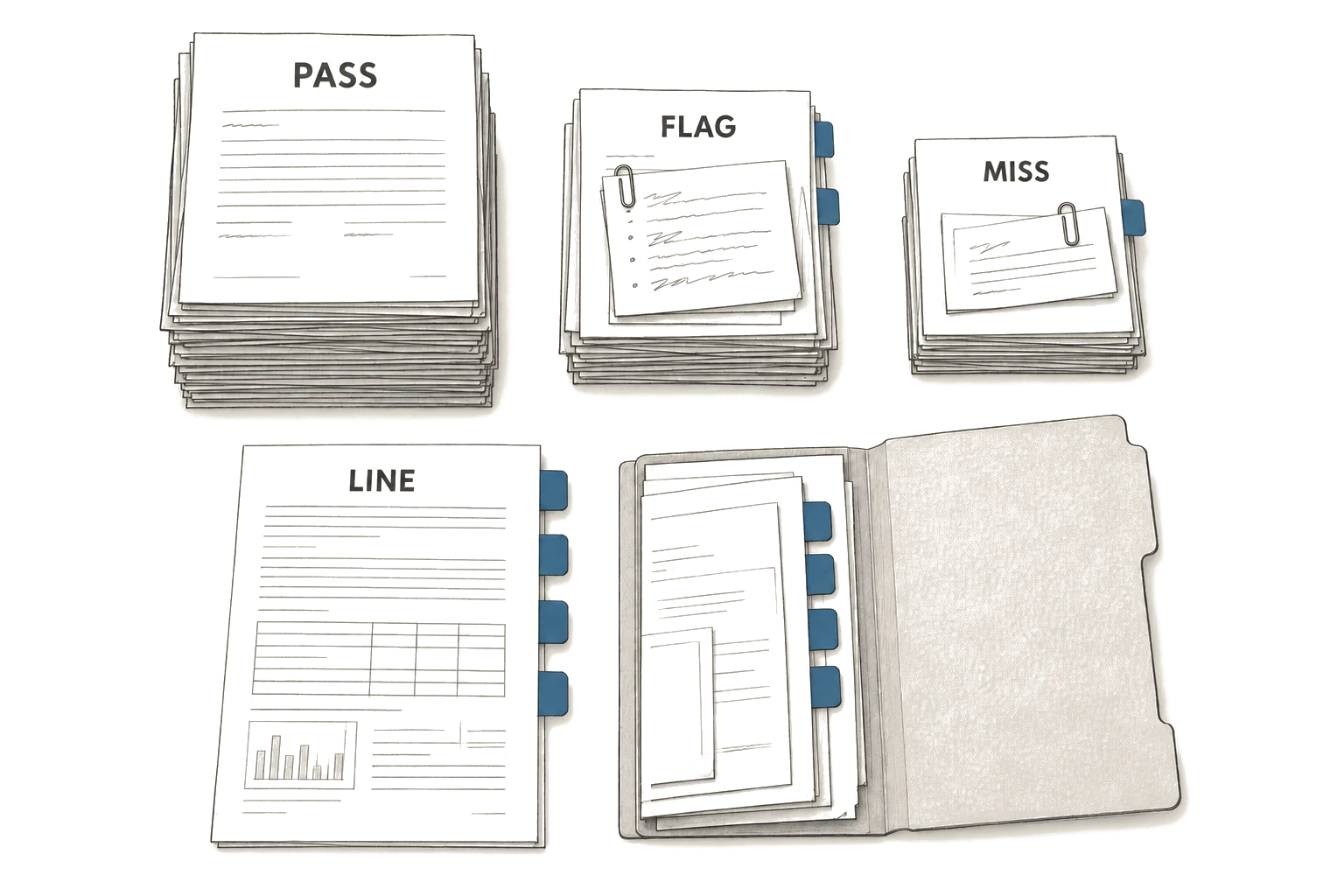
Pull last week's closed files. Sort them into three piles with your lead. Clear passes that needed no judgement. Flags that needed a call or a second look. Misses that slipped through and cost time later.
Mark what made each flag risky. Missing papers. New name. Amount above your sign off limit. Changed date. Write those marks on a single page. That page is your first draft of the line.
Now ask the supplier to map their plan to your page. Which marks always stop for a person. Which marks always pass. What proof stays with each case. If they cannot map to your marks, they are not ready for your desk.
Keep the page. Use it in the first month to score flagged cases. If flags match your marks, checking time will hold. If flags drift from your marks, move the line before overtime tells you to.