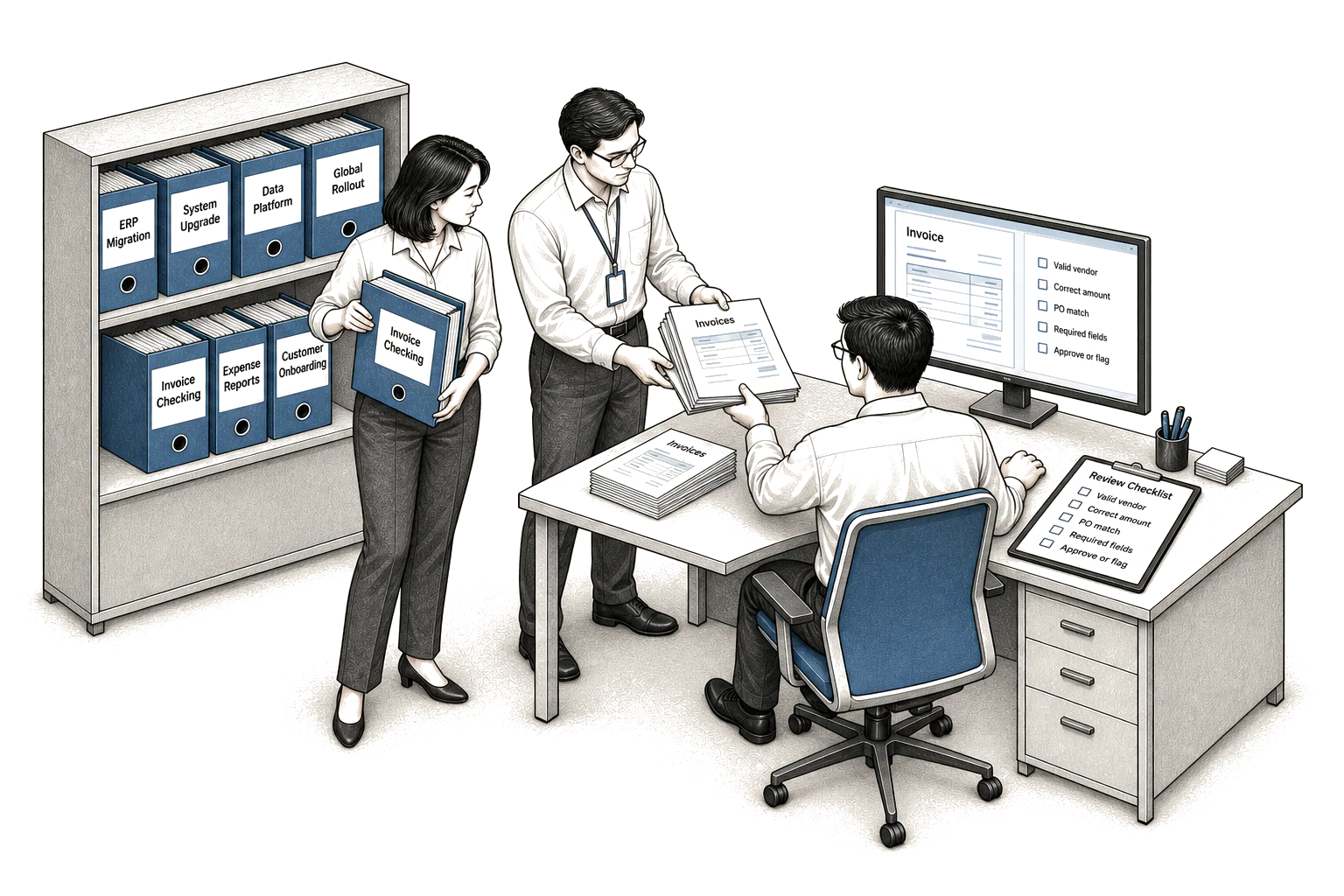
Give the boring weekly check to AI first
Give AI the boring job you already check each week, not the clever one you show visitors. That choice sounds dull, but it saves money, keeps trust, and lets your team learn fast. The flashy job touches angry callers, odd cases, and loose records. It fails in public. The boring job touches the same papers, the same screens, and the same checks. It fails small. Pick the job your crew calls routine, the one with a clear right answer, the one you already track on a wall or in a sheet. If no such job exists, do not start with AI. Fix the check first. Then bring in the tool.
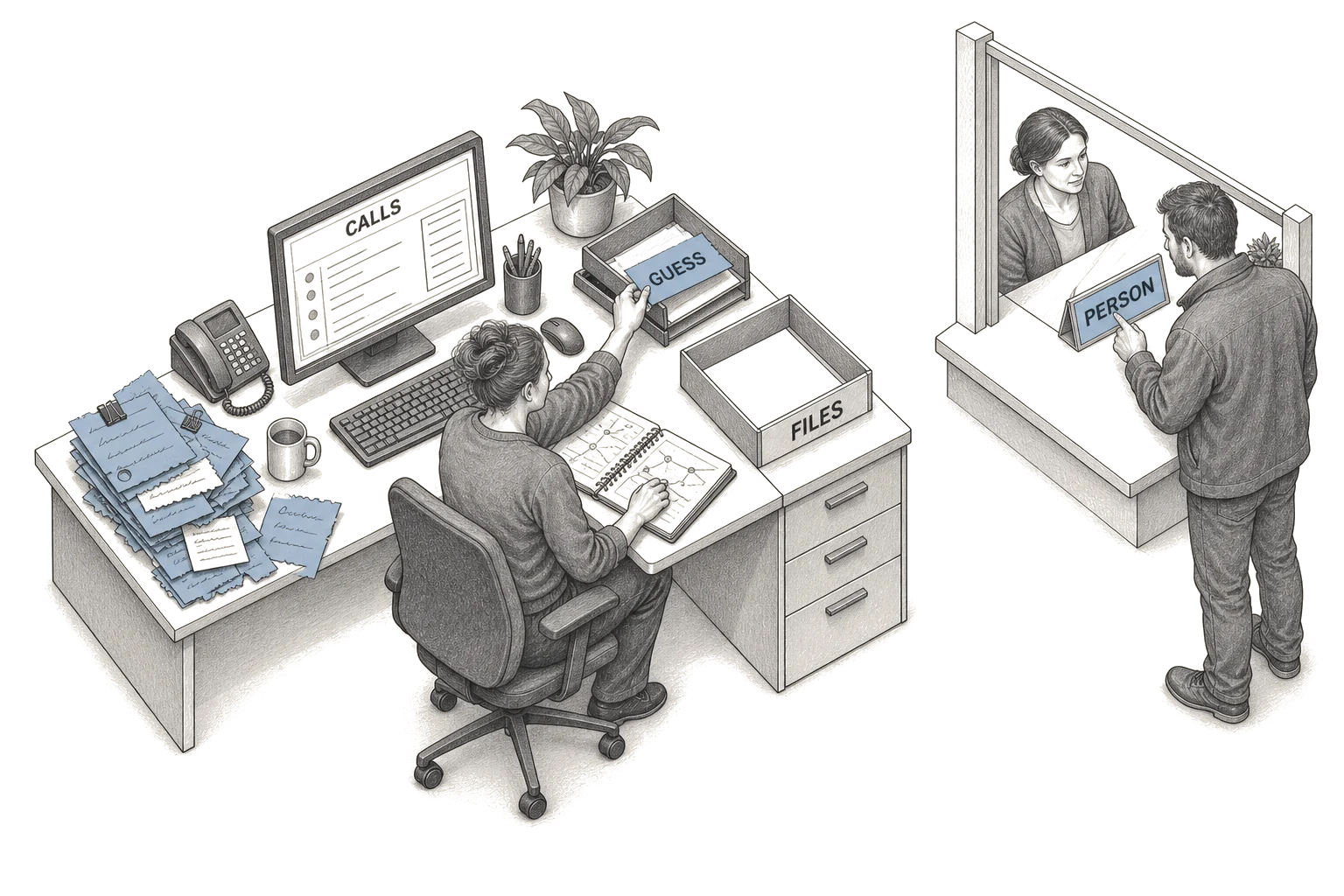
Why the showpiece fails as a starting point
Owners often start with the call queue, the chat window, or the sales inbox. Those jobs look big and feel modern, and they break early. Each call is different. Each caller wants a new thing. The right answer lives in heads, not in files. Your dispatcher knows which driver takes the tight alley. Your leasing manager knows which lease rider matters for one corner unit. That skill took years. A new system cannot learn it from thin files. It will guess. Staff will stop trusting it. Callers will ask for a person anyway. Worse, no one can say what good looks like. Was that answer kind enough. Was it complete. Teams argue. The trial drags. Start where the answer is plain. A goods receipt matches the order or it does not. A nightly room list matches the front desk log or it does not. A transporter's evening spreadsheet lists the stops or it misses one. Boring work has edges. Showy work does not. Edges let you check.
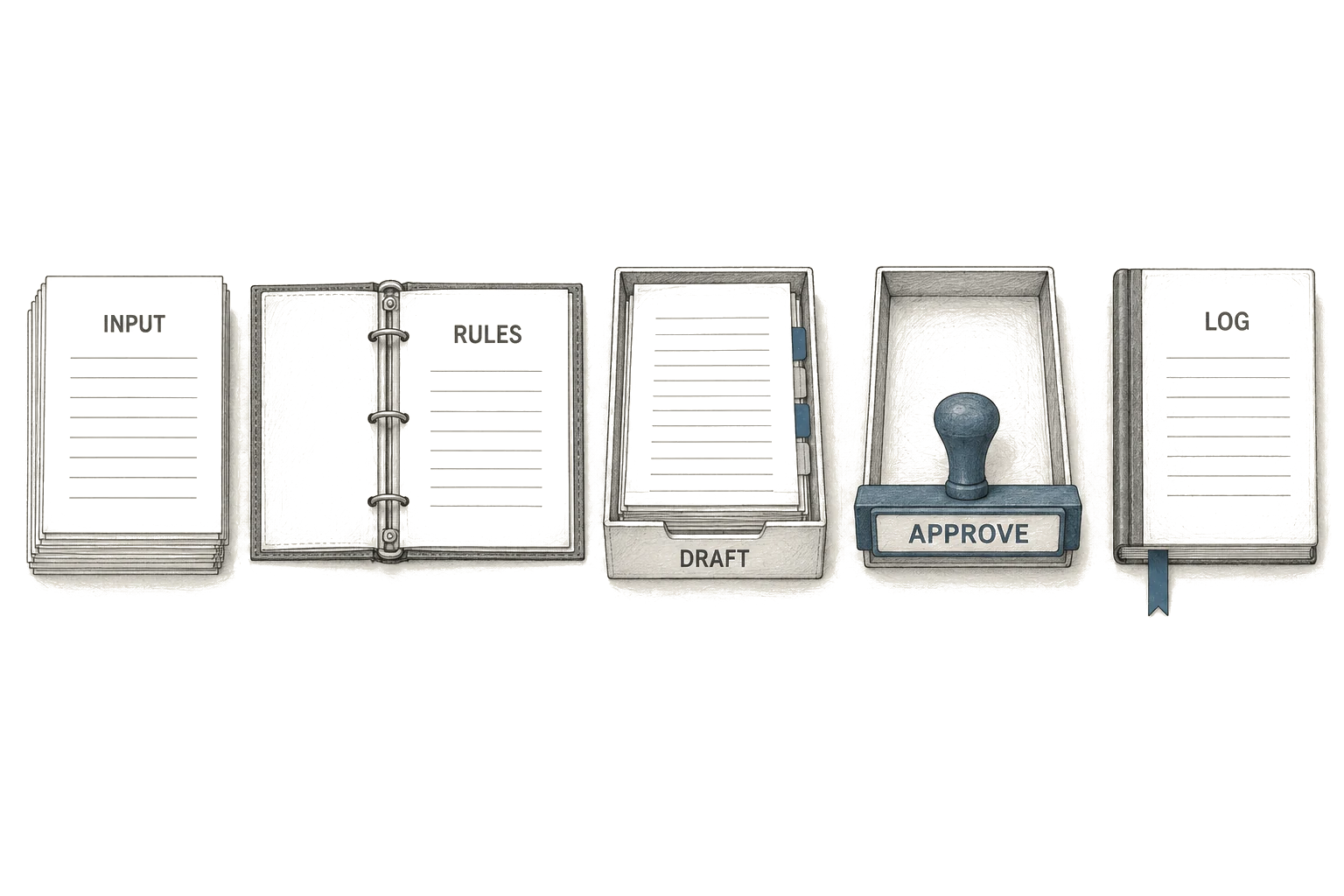
What a good first job looks like
A good first job repeats each day or each week. The steps stay the same. The inputs arrive in the same shape. You can point to the paper trail. The goods receipt sits by the dock door. The lease rider sits in the folder. The booking log sits in your current tool. A person with a rulebook could do it. That test matters. If fixed rules can do the job reliably, compare ordinary automation with AI before choosing the approach. Use the full cost of implementation, review and maintenance. You already report the score. Think days late on supplier bills. Think missed pickups on the evening route. Think open tickets at close. You know the normal rate. You will see any shift. The job allows a safe pause. The system drafts, sorts, or flags. A person signs off before anything leaves the building. Nothing posts on its own. Nothing promises a caller on its own. The link to your records is narrow. It reads a small set of fields. It writes to one place. It leaves a log your lead can read. For the math your IT friend will want, read when a business should use AI. That note speaks to your IT friend. This post speaks to you. Both point the same way. Start narrow, checkable, and dull.
Questions to ask with no engineer in the room
Bring this list to your next operations meeting. You need your lead, your records, and an hour. You do not need an engineer. Ask each question out loud. Write the answers down. Stop at the first weak answer.
- Can we check the work inside our normal routine. A good answer sounds like this. Maria already opens each goods receipt against the order before noon. A weak answer hides missing checks. It sounds like we trust the team or we spot check when free. That means no check exists. Do not start until the check has a name and a time.
- Does the same task arrive in the same shape most days. A good answer sounds like this. The transporter sends the evening spreadsheet with the same columns each night. A weak answer hides clean up work. It sounds like most of it is standard or the dates move around a bit. That means staff will clean the data by hand each day. Pick a steadier task.
- Is there a right answer we can point to. A good answer sounds like this. The lease rider says who pays for the filter change. We keep it in the folder. A weak answer hides judgement calls. It sounds like it depends or you need a feel for the client. That means the system will guess where your best staff now judge. Save that job for later.
- Do we already track the score each week. A good answer sounds like this. We count open tickets at close each Friday in our sheet. A weak answer hides vague hope. It sounds like we will feel the gain or time saved is clear. That means you cannot prove a win or catch a slip. Pick a job with a score you trust today.
- Can a person stop a bad result before it leaves us. A good answer sounds like this. Nothing posts to the ledger until Sam clicks approve. A weak answer hides auto send habits. It sounds like it only writes drafts or we can undo it later. Drafts still reach clients when inboxes auto send. Undo still costs a call and an apology. Demand a real pause.
- Do we hold the records the job needs. A good answer sounds like this. Past receipts sit in one shared drive with clear names. A weak answer hides spread files. It sounds like most of it is in email or ask Pat. That means the system will work from gaps and will state a wrong answer with full confidence. Gather the files first.
- Will staff still own the result. A good answer sounds like this. The front desk team keeps the nightly list and signs it. A weak answer hides fear or turf loss. It sounds like they will review if asked. That means no one owns the check. Name an owner who wants the win.
If all answers hold, you have a candidate. If more than a single answer wobbles, pick another job. The list is the test. To run a small trial that may fail safely, share how to run a pilot that can fail safely with your IT friend.
What this will not fix
This method will not fix thin records. It will not fix tangled sign offs. It will not teach staff to trust a tool they did not ask for. It will not get you IT, security, or procurement sign-off. You still forward those on your own. It will ask for steady effort from you. You must name the owner, the person who can say yes to a change and who answers for the result. You must guard their hours for checks. You must keep the source files clean and in one place, and say who is allowed to touch them. Your lead will need time each day to review early results. Your crew will need room to say the draft is wrong without blame. Your vendor links will need care. The connection to your ERP must stay live and watched, and someone in IT has to own that watch. Expect early flags that look fussy. A date written two ways will stop a match. A missing rider will push a file to a person. That fuss is the control working. Do not hand over client promises, safety calls, or cash moves in this round. Do not let drafts send on their own. Do not grade the trial by buzz. Grade it by your weekly score. If the score holds and the checks feel light, widen slowly. Add one more document type. Add one more site. Keep the pause in place.