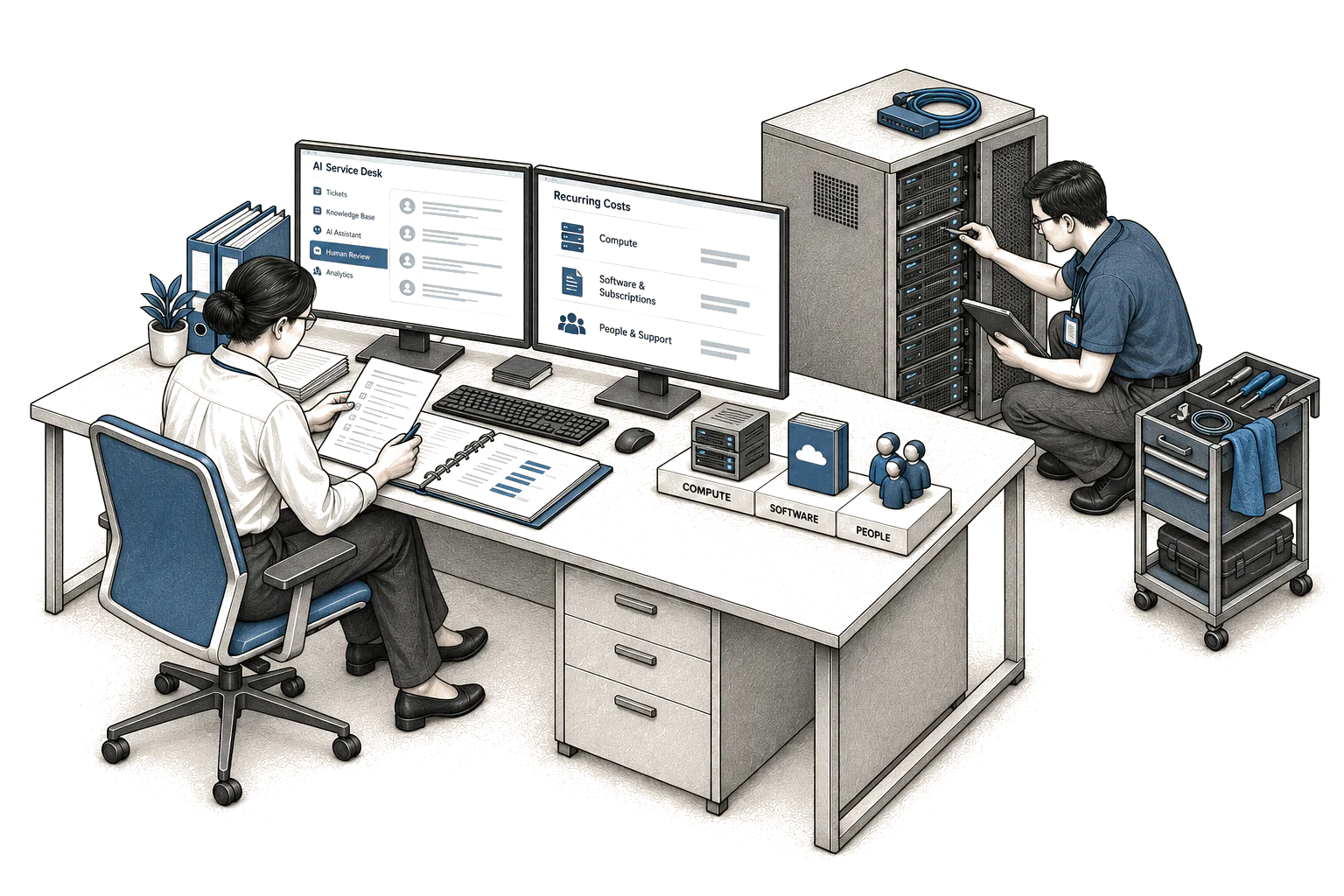
What will an AI system cost to run after it is built?
After the build, budget for review and corrections, hosting, model usage, integration maintenance and support. Their relative size depends on the workflow.
A quote that prices only the build is not a cost. It is a start date.
The work still has a desk. Someone still owns the exception, meaning a case a person still has to open.
You already know that desk. You already know who parks a hold and who signs the payment run.
How the work runs today
This scene is illustrative. It is how the work runs today, not evidence that anyone delivered this.
On Friday the receiving clerk posts the goods receipt in your ERP.
Accounts payable opens the supplier invoice against that receipt and the purchase order.
When the three do not match, the clerk writes a note and parks the invoice.
The controller still signs the payment run before money leaves.
Close week still has a three-way match report. The supplier still calls if the hold sits.
That is the cost you already run: hours, holds, and a late call.
You can count those hours this week. You do not need a new quote to see them.
The same week with a system in it
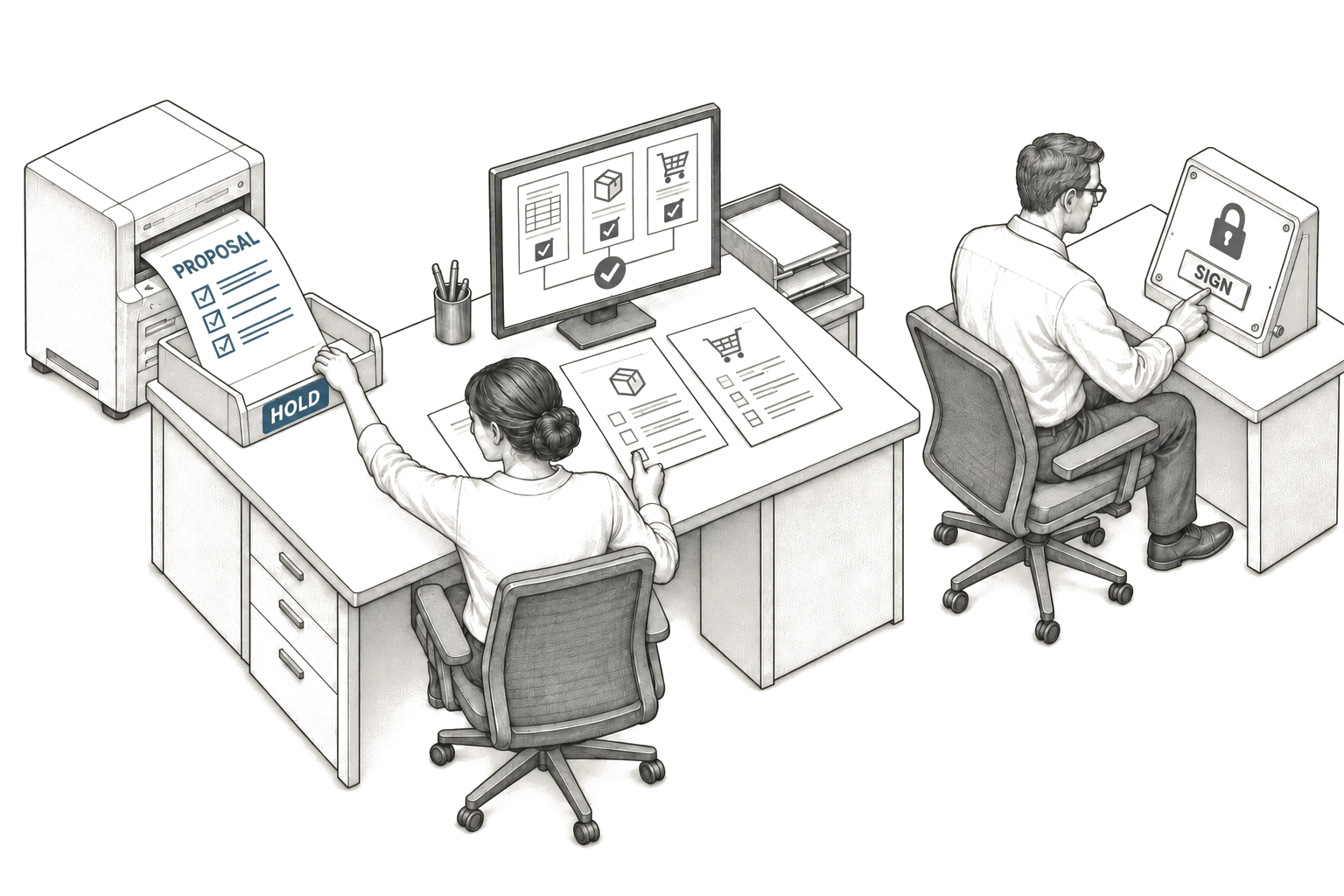
This scene is illustrative. It is the same week with a system in the path.
A language model, meaning software that drafts from your records, reads the invoice, the receipt, and the order.
It proposes a match or a hold. The AP clerk still opens the hold.
The clerk still decides whether to pay. The controller still signs.
Nothing about sign-off moved off the desk. The new work is checking the proposal.
Then someone fixes the ones that are wrong, and someone retrains the clerk on what to trust.
After that you pay to keep the system on a machine you can reach, then you pay for the model.
These are recurring costs to estimate separately, rather than assume a fixed ranking.
A build quote that stops at go-live leaves those three lines out. It is not a year of cost.
If you want the arithmetic a technical reader will check, use the worked operating-cost example.
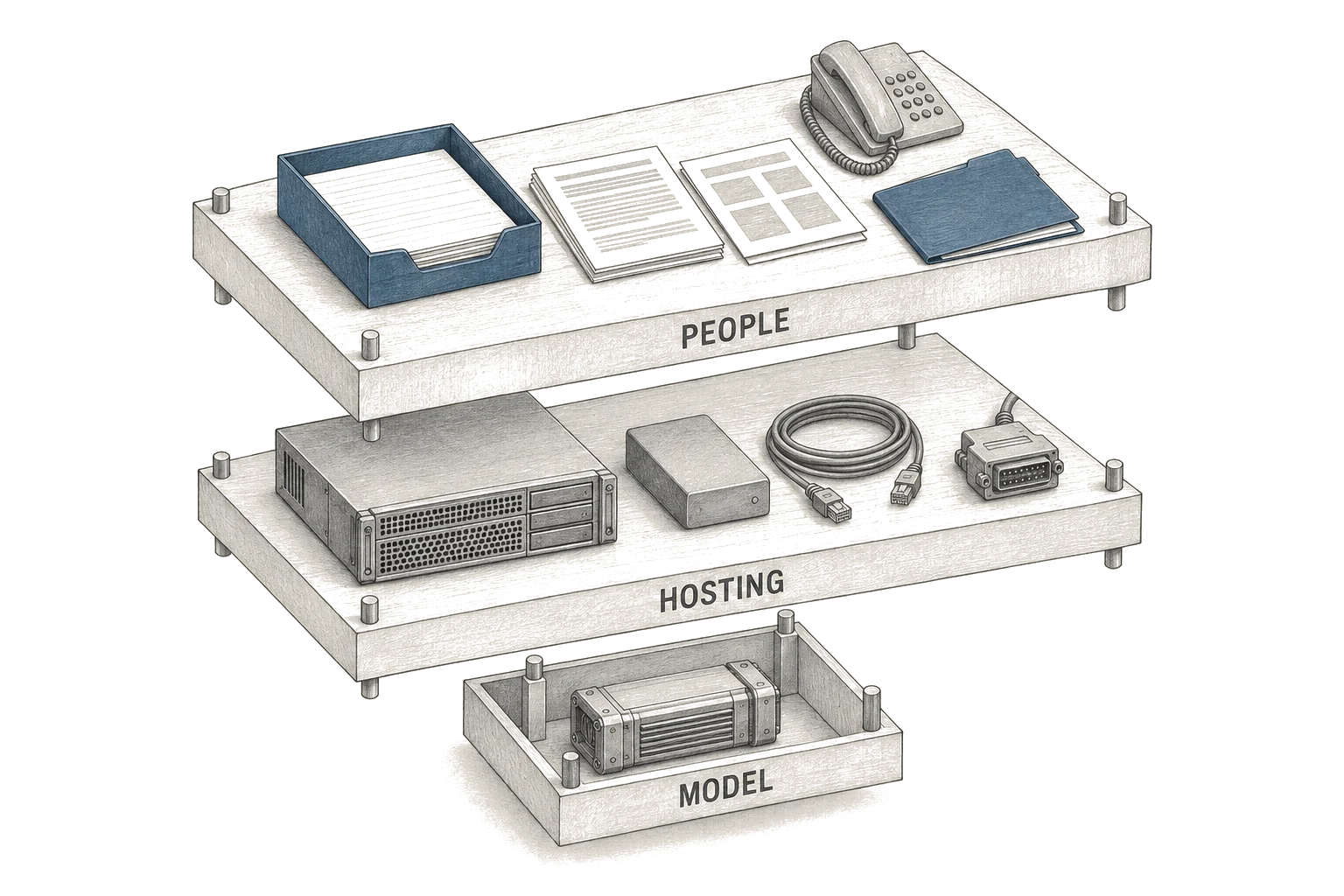
What you pay, in the order it hits the desk
People checking and fixing. Measure the review and correction effort in your workflow.
Someone still reads the hold, then compares it to the goods receipt.
Someone still calls the warehouse when the receipt is late, then explains the hold to the supplier.
If your AP desk spends two hours a day on mismatches, that is two hours you can count this week. That figure is an illustration. Use your own hours, not theirs.
Wrong proposals do not vanish. They turn into rework. Rework is still labour.
The person who owns the payment run still owns the miss. The system does not sign.
Hosting. This is the machine, the backup, and the connection to your ERP.
Someone has to keep that connection alive when a screen in the ERP changes.
Someone has to say where the records live. Inside your building or not is a security decision you will forward.
You do not need to size the machine. You do need to know who is on the hook when it is down on close Friday.
The model. Estimate usage from the request volume, input and output lengths, and selected rates.
You pay each time it reads a packet of records and drafts a match or a hold.
Volume moves this line. A quiet week is cheap. A close week is not.
Compare this estimate with review and hosting costs. Treat a model-only quote as incomplete.
What a build quote leaves out
A build quote covers getting the first proposal onto the clerk's screen.
It does not cover the clerk's hours after that week, or the controller's sign-off.
It does not cover the person who fixes a mapping when the purchase order type changes.
It skips the meeting where you decide which holds a person must still open.
If the quote has no line for review, it is not a running cost. Ask for that line before you take the number upstairs.
What this does not solve, and what it will demand of you
This does not get you IT, security, or procurement. You still forward those.
It does not make review free. If the clerk must open every hold, you have not removed the desk.
Budget review effort explicitly rather than assuming model usage represents the full operating bill.
This will demand a named owner for wrong proposals. Name them before go-live.
It will also demand hours on the existing desk, not a new team you do not have, and a place the goods receipt, the invoice, and the order already live.
Someone will have to step in when the ERP screen changes, often a person already on your close list.
And it will demand that you keep the payment run in human hands. Do not pretend the system signs.
A list you can take into a meeting with no engineer present
Print this. Fill it from the desk, not from a quote.
- Who opens a hold today, by name and role.
- Who signs the payment run, by name and role.
- How many supplier invoices hit the desk in a normal week. Count from your own queue.
- How many of those become a hold. Count from last month if you can.
- Minutes the clerk spends on one hold. Time three of them this week.
- What document they open first: goods receipt, purchase order, or invoice.
- What they do when the warehouse has not posted the receipt.
- Who the supplier calls, and at what point in the week.
- Where the records live today, in the ERP or in a side spreadsheet.
- Who you call when an ERP screen changes during close.
- Which holds a person must still open, even if the system proposes a match.
- Whether the build quote has a line for those hours after go-live.
If you cannot fill items 1, 2, 5, and 11, you cannot tell whether a quote is a cost.
If the quote excludes review effort, ask for it alongside hosting, model usage, integration maintenance and support.