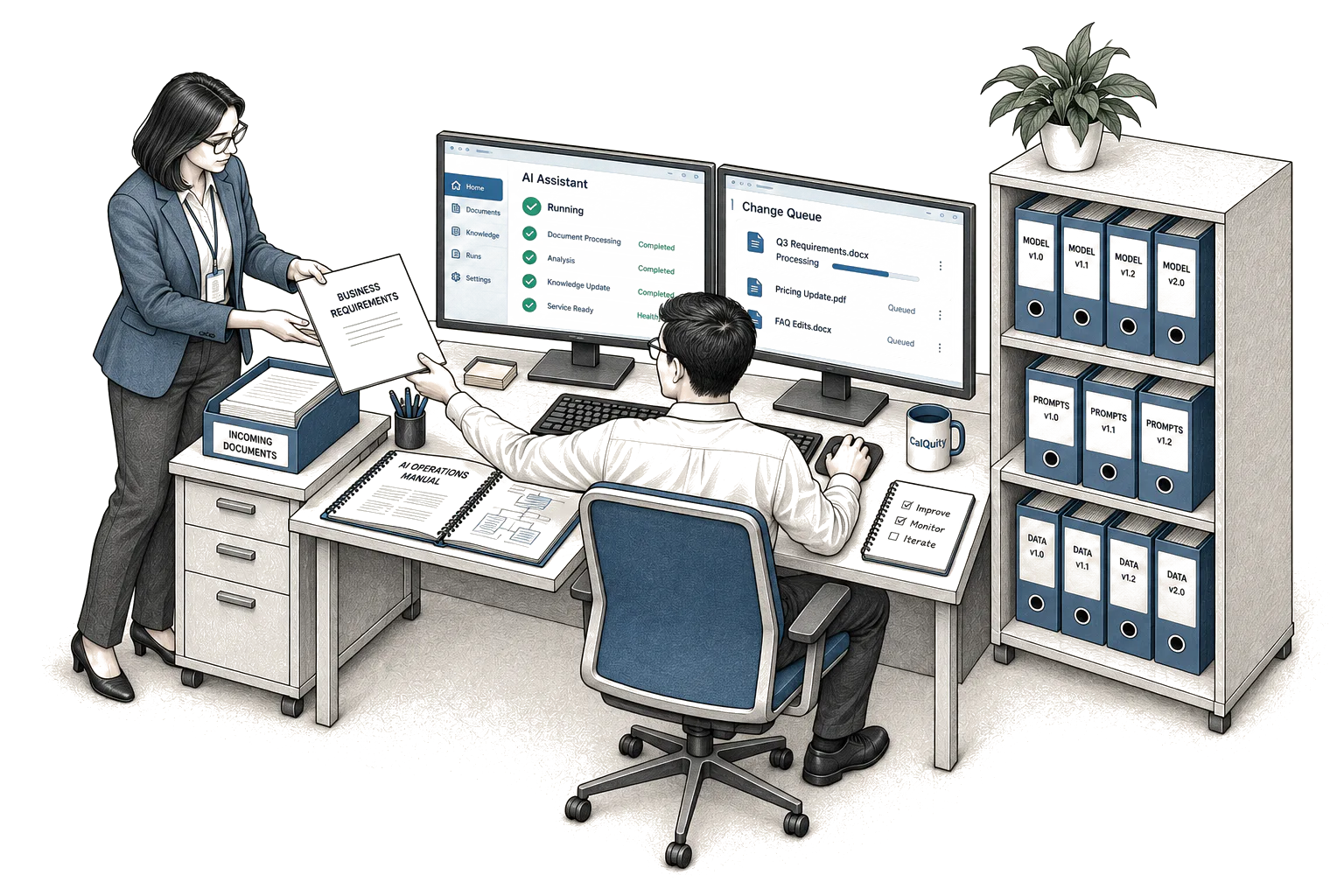
The first version keeps working only until your forms, rules or workload change. Your operation never stands still. New staff join. Suppliers update their sheets. Customers ask for new options. The system that supports the work must move with it. The choice that matters is who holds the ability to keep changing it. That ability can sit with your team, with the people who built it, or shared between both.
Why a working system keeps needing work
A live system touches daily work. Daily work shifts. A leasing manager adds a new clause to the lease rider. A dispatcher changes how late runs are assigned. The front desk at nine in the evening starts taking a new kind of request. Each small shift breaks the match between the system and the job. The system still runs. It just fits less well. Staff notice first. They keep side lists. They add checks by hand. They stop trusting the result. That drift is normal. It means the business is alive. The fix is not a rebuild. It is steady care: someone sees the shift, someone updates the system, and someone checks that the update helped. Without that loop, even a good start fades. With it, the system stays useful for years.
What has to exist to keep it working
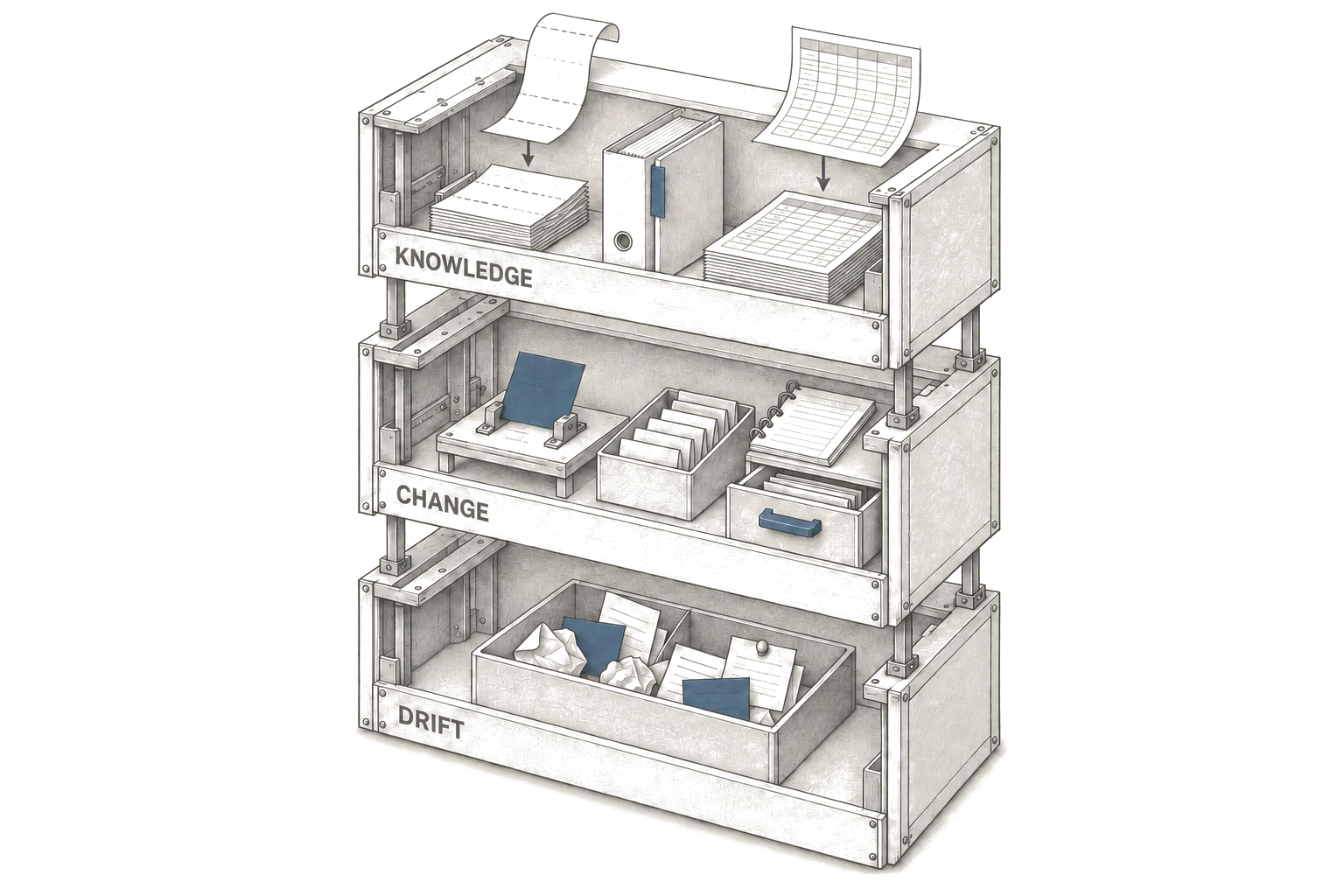
Three things keep a system useful after launch. Leave one out and the rest wobble.
First, someone who understands it. Not in theory. In practice. That person knows where your records come from. They know how the system reads the goods receipt. They know why the transporter's evening spreadsheet needs cleaning before use. They know which steps matter and which are habit. When a form changes, they know where that change touches the system. This knowledge can live in your team or with the builder. It cannot live nowhere.
Second, a way to change it safely. Safe means small. Safe means tested on real cases from your week. Safe means you can undo a bad change by the next morning. A clerk should not find out about a change from a failed shift. A safe change starts with a clear request. It ends with proof that common work still passes. It keeps a record of what changed and why. That record lets the next person learn fast.
Third, a way to tell when it has drifted. Drift is quiet. The system still answers. The answers slowly miss. You need a plain signal. Review the cases it got wrong each week. Look at cases that needed a person to step in. Track complaints from the desk. Ask staff where they now double check the work. Those signs show where the match is thinning. For the checks involved, read the engineering behind this in how another team runs a system built elsewhere. The method is simple. Compare current work to past work. Act before workarounds harden.
When those three exist, continuity is calm. When one is missing, every change feels risky.
Two normal ways to hold that ability
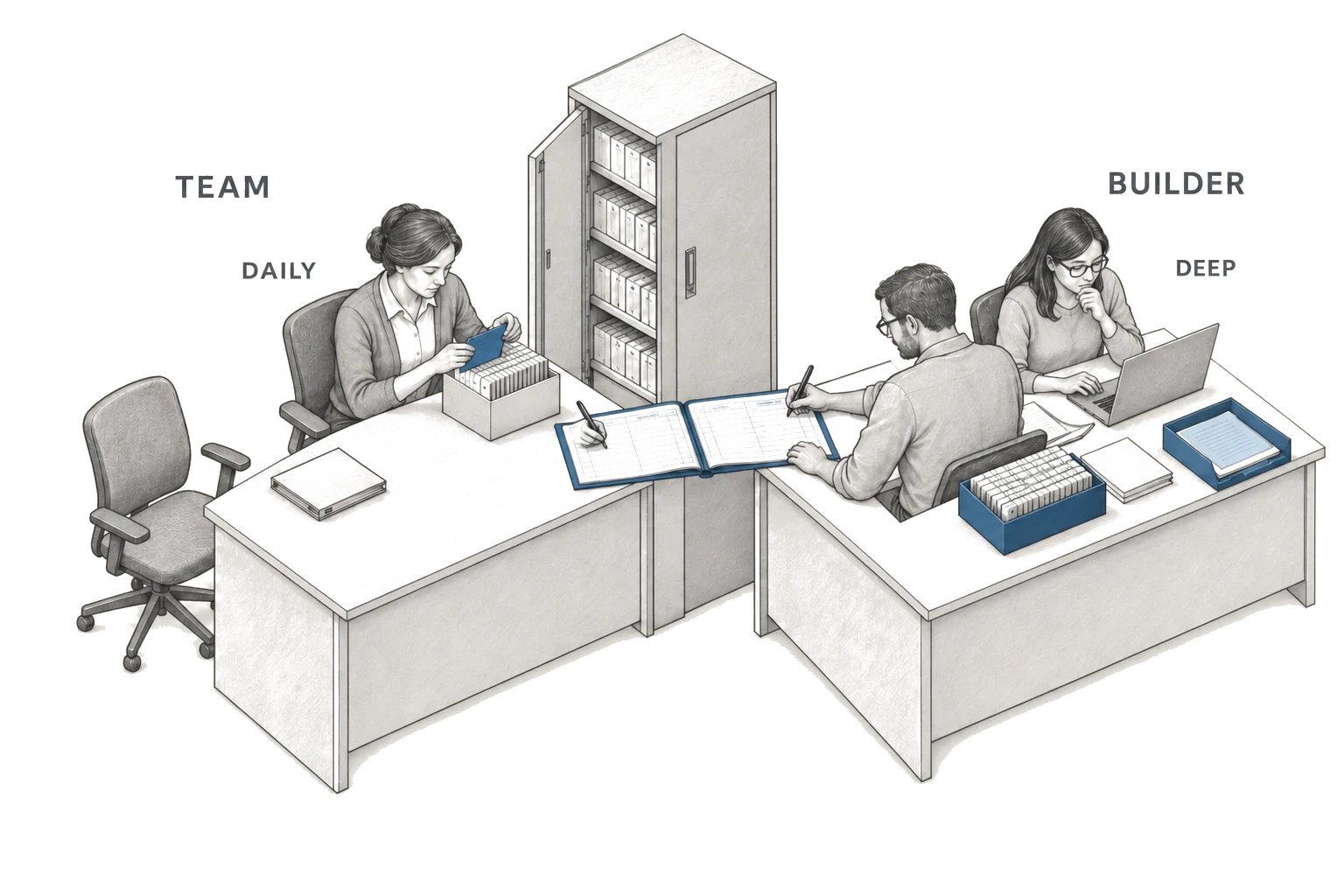
Your team can take the system over. Or the people who built it can keep running it. Both are normal. The right pick turns on which risk you can carry.
If your team takes it over, you gain speed on small changes. A supervisor spots a new lease rider. Your own person updates the rules. No handoff delay. This path needs time from your people. It needs access to records. It needs cover while they learn. It suits teams with steady staff and room to learn new tools. The risk is thin cover. If one person holds all knowledge and leaves, care stalls.
If the builder keeps running it, you keep depth on call. They already know the system. They have seen the same shift elsewhere. They can test a change against many past cases. This path needs clear contact. It needs a shared log of requests and fixes. It needs a plain way to say what hurts most this month. It suits teams with full plates and high turnover. The risk is distance. They may miss a local shift until you flag it.
Many groups share the work. Your team handles daily review. The builder handles deeper changes. The line moves over time. Start where cover is stronger. Ask which risk keeps you up at night. Thin cover at home, or distance from help. Pick the one you can manage. Revisit the pick each year.
Questions to ask in a meeting with no engineer present
Use this list with your own staff and with any outside help. No technical skill is needed. Listen for plain answers tied to your work.
- Ask who knows how the system handles your key documents. A good answer names a person and walks through the goods receipt without notes. It names where the data comes from and where it goes after. A vague answer hides thin knowledge. Phrases like someone on the team knows suggest no one does.
- Ask what happens when a form changes. A good answer gives steps, a name, and a time frame in working days. It says who tests the change and how you undo it. A bad answer hides delay. Talk of process without a name means the work will wait.
- Ask what happens when a rule changes. A good answer points to where rules live. It shows how the leasing manager would request a change to the lease rider. It shows a past change and what proof followed it. A bad answer hides hard coding. If every rule change needs a project, small changes will pile up.
- Ask how you will know when volume doubles. A good answer names the strain points in your week. It says how fast it answers during the morning rush. It says what staff should watch when queues grow. A bad answer hides hope. Assurances without a watch list fail on the busiest day.
- Ask how you review the cases it got wrong. A good answer shows a short weekly review. It names who reads the misses. It shows how a miss turns into a fix. It admits the system once made something up from a thin record and shows what changed after. A bad answer hides drift. If no one owns the review, misses collect quietly.
- Ask what the builder leaves behind each month. A good answer shows a plain log. It lists changes, reasons, and results in words your dispatcher would grasp. A bad answer hides lock in. A log only the builder can read keeps you tied.
- Ask what you must provide to keep care steady. A good answer asks for little and names it: access to records, time with the front desk at nine in the evening, a quick sign off on changes. A bad answer hides heavy lift. If care needs hours you do not have, the plan will slip.
Run these each quarter. Keep notes. Change follows notes.
What this does not solve
This care does not fix unclear ownership of the work itself. If two teams both claim the roster, the system cannot settle it. If the rule is still argued at the desk, software will carry that argument forward. Sort the rule first. Then ask for the change.
It does not remove the need for your time. Someone must grant access to records. Someone must explain the transporter's evening spreadsheet. Someone must confirm that a fix matches the real job. Expect a short weekly review and a longer talk when rules shift. Without that time, even strong help will guess.
It does not cover the connection to your ERP or other core tools without care. Connections break when fields change on either side. Ask who watches those links. Ask how you learn of a break before the morning shift does.
It will demand plain discipline. Log requests. Name owners. Review misses. Keep the list short so it gets done. That habit matters more than any tool choice.