
How to tell the options apart
Watch who clears the goods receipts after the helpers leave, and you see how contract staff, an agency, embedded engineers and a licence differ.
You run the work. You own the rota. You answer for missed dates. You do not control security sign off. You do not control buying. You need help that fits how your desk already runs.
Each option moves two risks. One risk is that the work never goes live. The other risk is that no one on your team knows the work at the end. Pick by which risk you can hold.
The dispatcher knows this question well. The leasing manager lives it each month. The front desk at nine in the evening feels it when the system stops and no helper answers.
The options in plain terms
Contract staff take your direction day by day. You set tasks. You check output. You keep the plan. They add hands.
An agency takes a defined job and returns it done. You agree what done means. You supply access and answers. They manage the build.
Embedded engineers sit with your team until the work runs. They learn your files. They learn your names for things. They hand over skill as they go.
A licence gives your team software to run. You use it with your records. You change how you work to fit it. You keep it running.
| Option | Daily direction sits with | If it stalls, you face | What stays with you |
|---|---|---|---|
| Contract staff | You | Idle hands and slow pace | The plan and the output |
| Agency | The agency lead | A fixed job left open | The finished job |
| Embedded engineers | Shared with your lead | Joint delay and shared cost | Staff who know the work |
| Software licence | You | A tool unused on the desk | The tool and new habits |
No option is better in all cases. Each leaves a different gap for you to cover. For the ownership and handover questions behind these choices, read Build, buy or partner for enterprise AI.
Use this rule. If you can teach and keep staff, hold the learning risk. If you cannot spare time to direct, hold the delivery risk with help. If you must keep full control of the day, keep direction. If your team will run the same steps for months, a tool can fit.
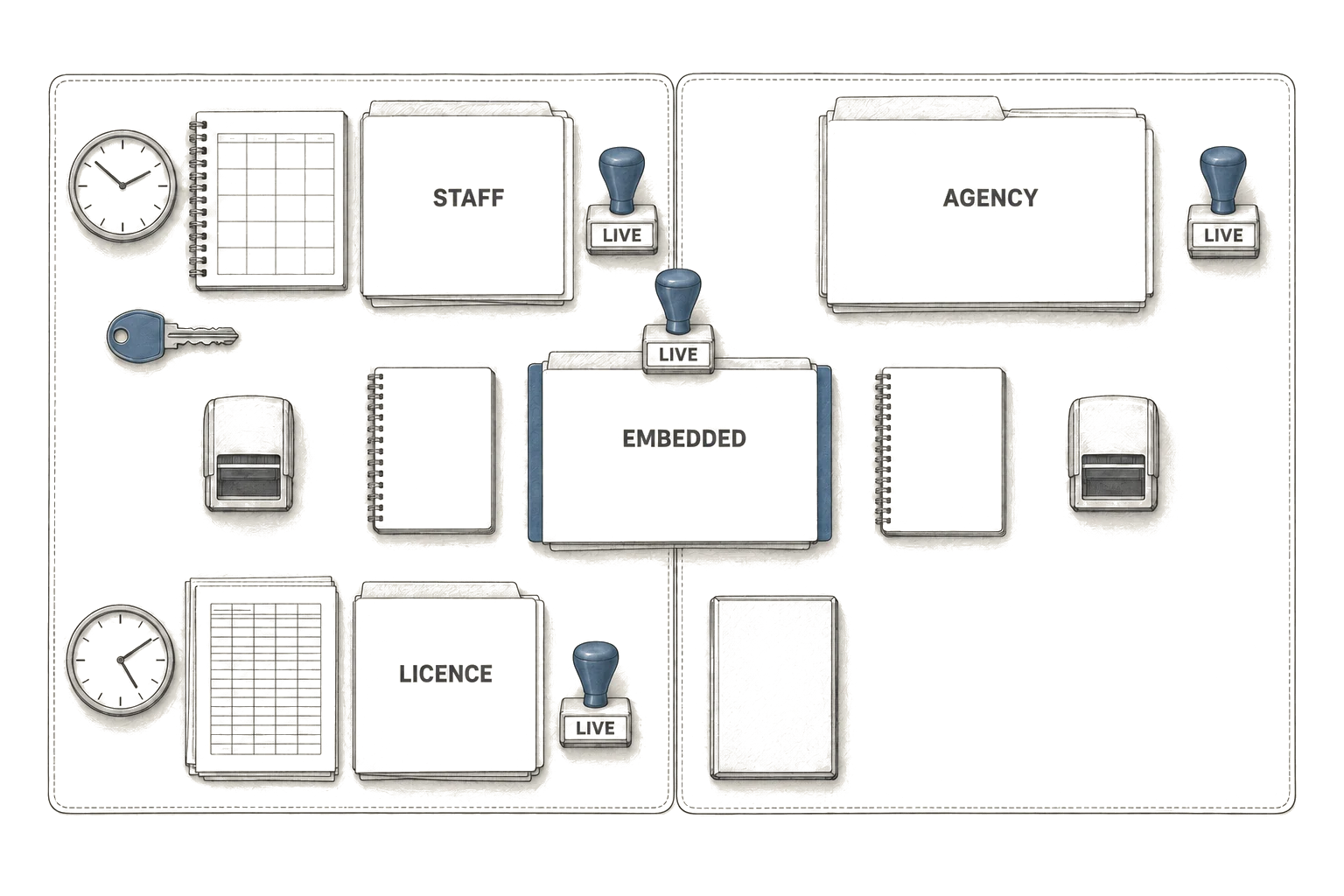
Who carries the risk that it never goes live
Live means the team can use the system in its normal workflow, with the agreed checks, support and fallback in place.
With contract staff, you carry this risk. You plan the steps. You spot blocks. If records are messy, pace drops. If your lead is pulled away, pace drops. You pay for time whether or not the work goes live.
With an agency, the agency carries much of this risk. They staff the build. They manage pace. You still carry one part. You must give access to records. You must give answers on time. If you cannot, dates slip. Read the scope with care. Ask what counts as live. Ask who fixes early faults.
With embedded engineers, you share this risk. They sit in your meetings. They see blocks early. They change course with you. You must still make room. You must free your best clerk for questions. If you cannot, learning slows and dates slip.
With a licence, you carry this risk after purchase. Your team must change habits. Your team must clean inputs. Your team must use the tool each day. If the front desk at nine in the evening falls back to old sheets, the tool sits idle. The fee still runs.
Ask one plain test. Who finds out first when records are wrong. If the answer is no one until month end, live use will slip. Fix that owner before you sign.
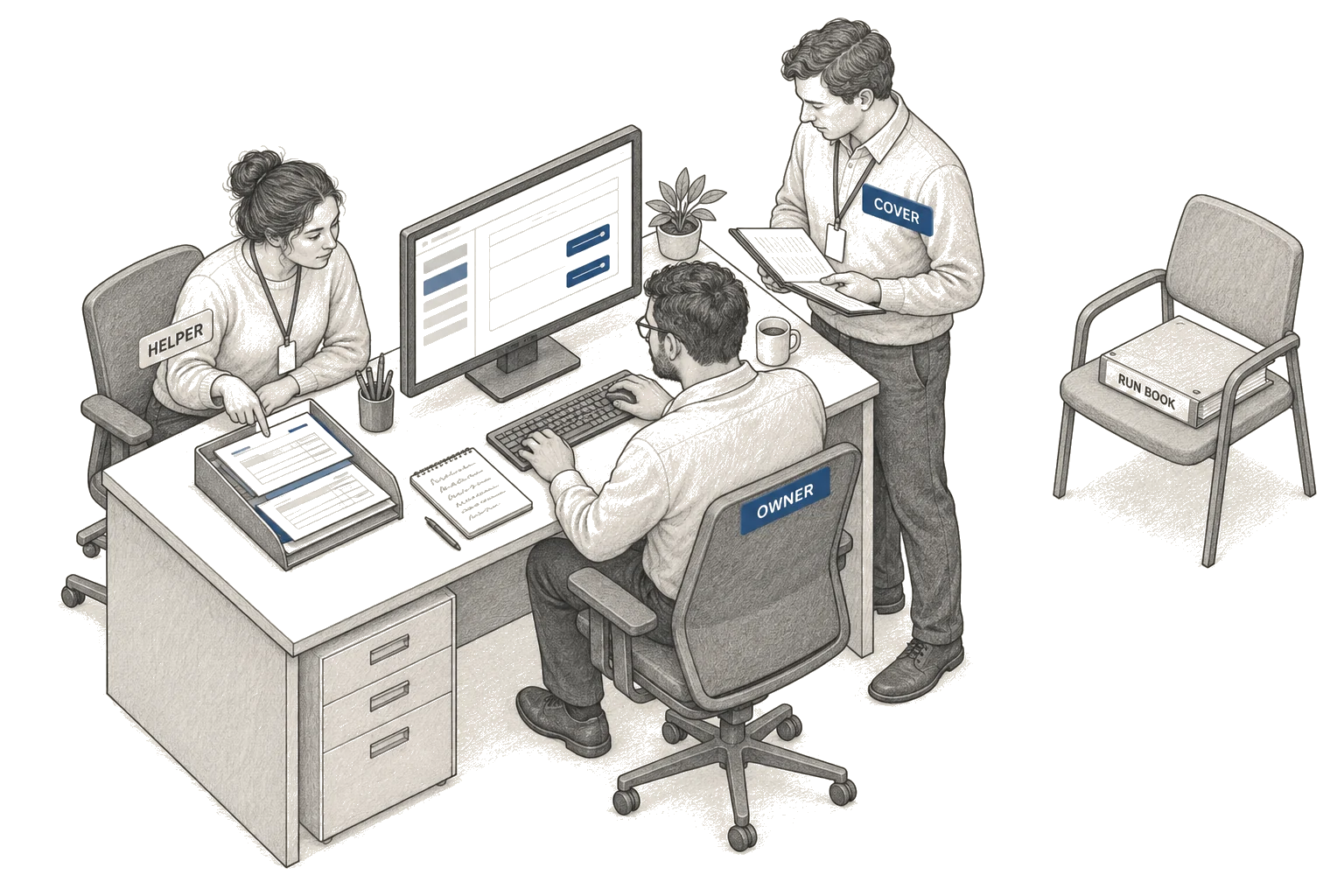
Who knows the work at the end
Knowledge means someone on your rota can run it, fix small breaks and explain it to a new starter. It is not a folder of notes. It is a person who has done the job.
With contract staff, knowledge can stay if you plan it. Pair each helper with a named staff member. Make that staff member do the clicks. Review the goods receipt together each week. If you skip this, knowledge walks out on the last day.
With an agency, knowledge is thin unless you buy it. They leave a working job. They leave notes. Your team may still fear to touch it. Ask for joint shifts before handover. Ask for a run book written in your names for things. Walk a new starter through it while the agency still answers.
With embedded engineers, knowledge is the point. They work beside your people. Your dispatcher learns why a match failed. Your leasing manager learns what to check on a lease rider. At the end, your staff can run the day. You still need cover for leave. Name two owners, not one.
With a licence, knowledge means habits. Your team knows which buttons to press. They know what to do when the answer looks wrong. They do not know how the tool was built. That is fine if the tool fits stable work. It hurts if your steps change each month. Then you need help again to adjust it.
Ask one plain test. Who covers leave in August. If no one on your rota can name that person, knowledge has not landed.
What this does not solve and what it will demand of you
None of these fix unclear ownership, clean your records for you, or win sign off from security. None shorten buying steps or settle fights between desks about who owns a check.
All of them will demand time from your best people. Someone must answer questions about the work. Someone must open access to systems. Someone must test with real cases. Someone must tell the helper when the answer is wrong in plain words.
Expect to free your lead clerk for some hours each week through the build. Expect to bring the dispatcher into review. Expect to let the front desk try early versions on quiet shifts. If you cannot free these hours, delay the start. Starting without them moves cost without moving risk.
You will also need patience for early faults. The first weeks will surface wrong names, old codes and missed steps. Keep a simple log of the cases it got wrong. Note what should have happened. Share it in the weekly review. This log becomes your proof of fit.
A test you can run next week
You can do this with no engineer present. Book one hour with the people who run the desk. Bring a recent problem file. Use the lease rider, the goods receipt or the transporter's evening spreadsheet from last week.
Work through this checklist together. Write answers on one page.
- Name the job to be done in one line, as the customer sees it.
- Name the owner who can say yes to a change in steps.
- List who must give access to records and by which date.
- List the checks you do today that no one wrote down.
- Name who will run the work on a normal Tuesday after helpers leave.
- Name who covers that person during leave.
- State what counts as live, in desk terms.
- State how you will spot the cases it got wrong each week.
- State how many hours your lead clerk can give each week through the build.
- Pick which gap you can hold: slow pace you direct, a fixed job you must feed, shared delay you must staff, or a tool you must bed in.
Take that page to your technical contact. It lets them size the work without guessing. It also shows where you need cover before you sign. Keep the page. Review it at each meeting. If answers change, risks have moved.