What a forward-deployed engineer actually does
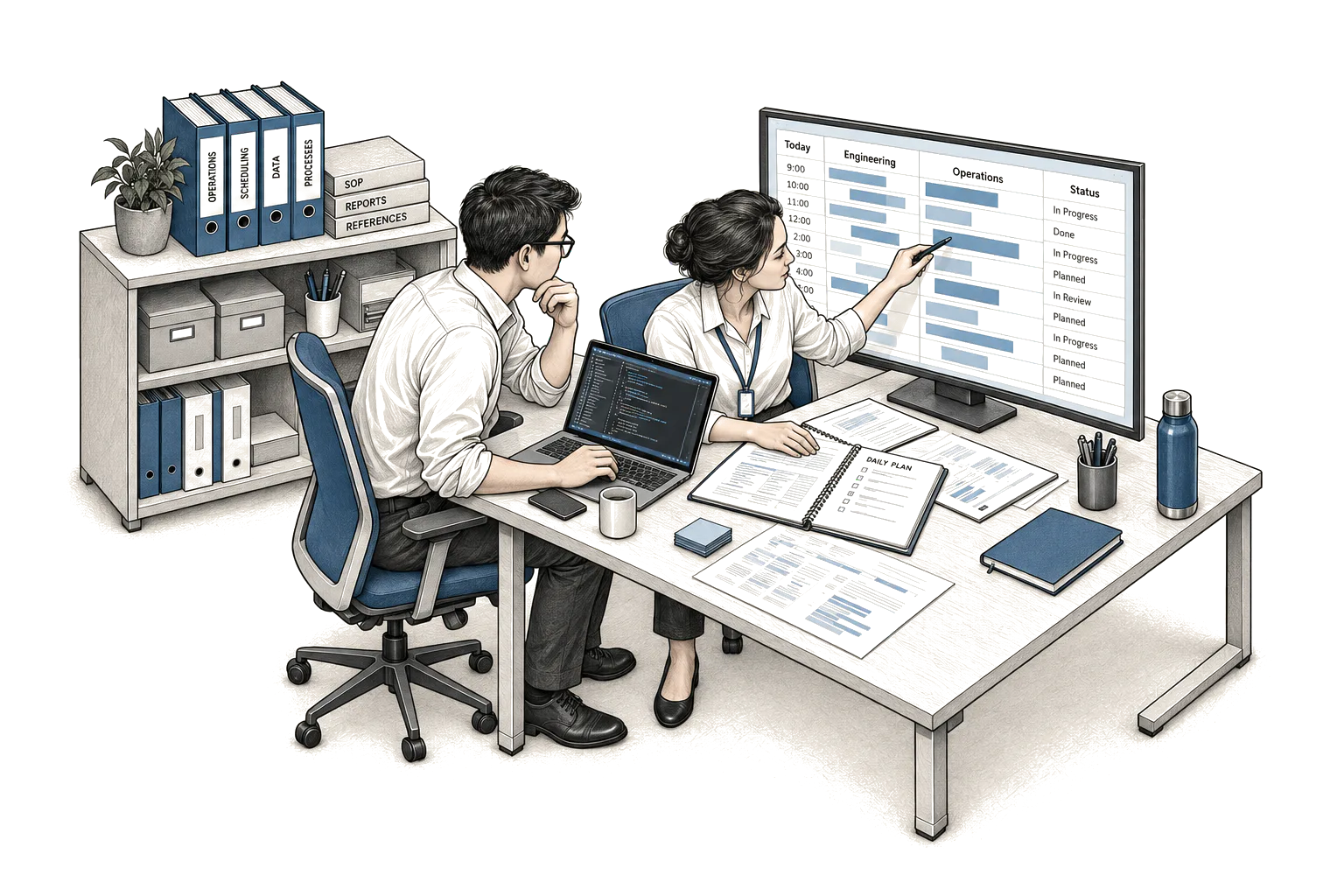
A forward-deployed engineer works directly with the people running an operation and takes responsibility for turning what they learn into working software. They need access to the leasing manager, the dispatcher, or the evening desk, and the ability to change the system when the work exposes a wrong assumption. The working arrangement can include time on site or remote collaboration, depending on the workflow.
This post uses an illustrative receiving desk to show what that responsibility looks like during a working week.
How the work runs without them
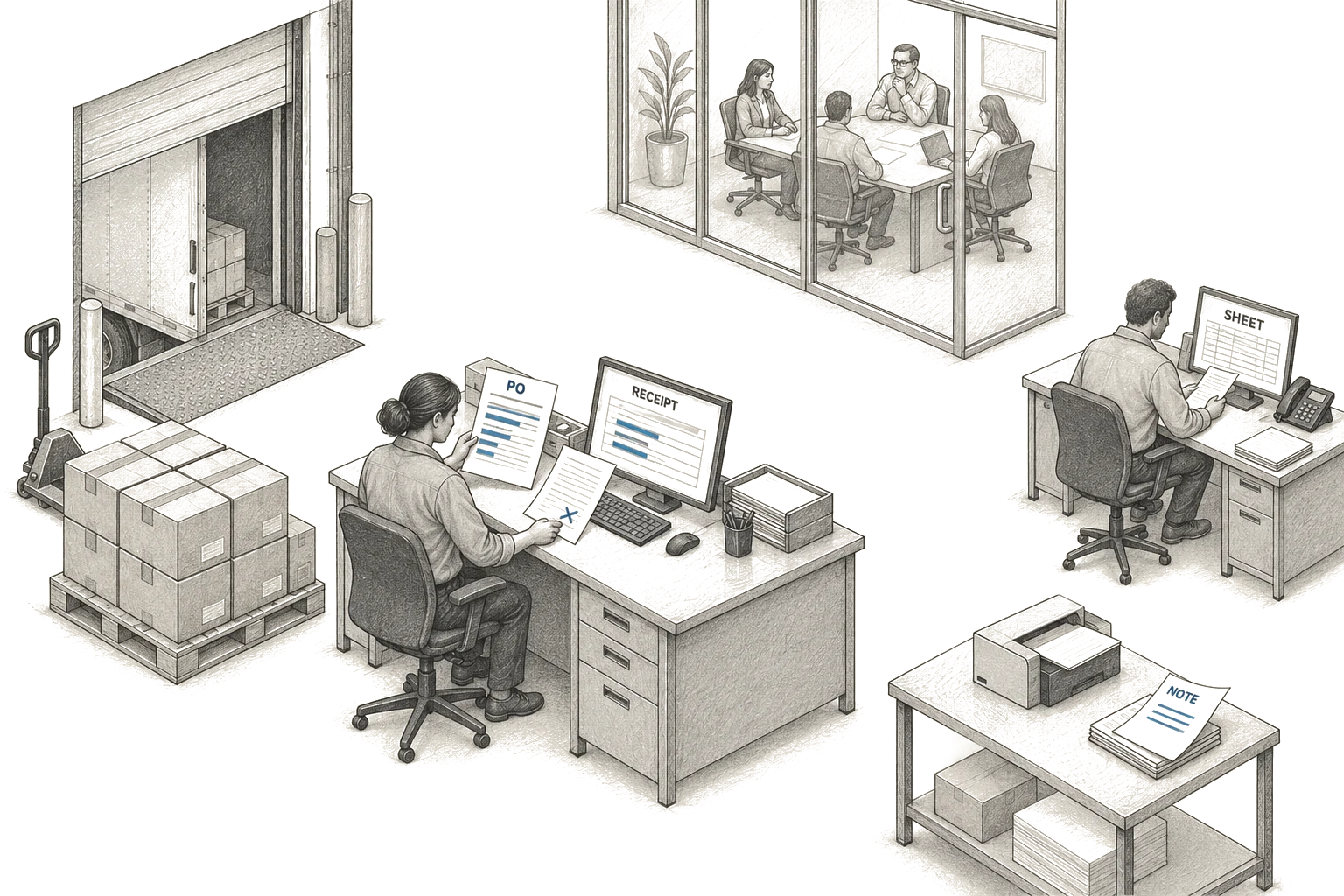
This scene is illustrative. It is a receiving desk at the close of a shift, not a success story.
A pallet arrives. The purchase order says twelve cases. The goods receipt on the screen says ten. The receiving clerk cannot close the line. The usual path has no box for this. This is an exception, meaning a case the usual path cannot close. The clerk prints the packing slip. They write on it. They walk it to the buyer. The buyer is already in a meeting. The transporter's evening spreadsheet still shows the load as delivered. The dispatcher will call at nine. The clerk leaves a note on a pad by the dock printer. Tomorrow someone will hunt for that pad.
Nothing here is broken in a way a ticket can name. The records are in three places. The people who can close the case are not in the same room at the same time. The clerk's judgement is the system. That is the work a forward-deployed engineer is hired to sit inside.
How the same work runs with a system in it
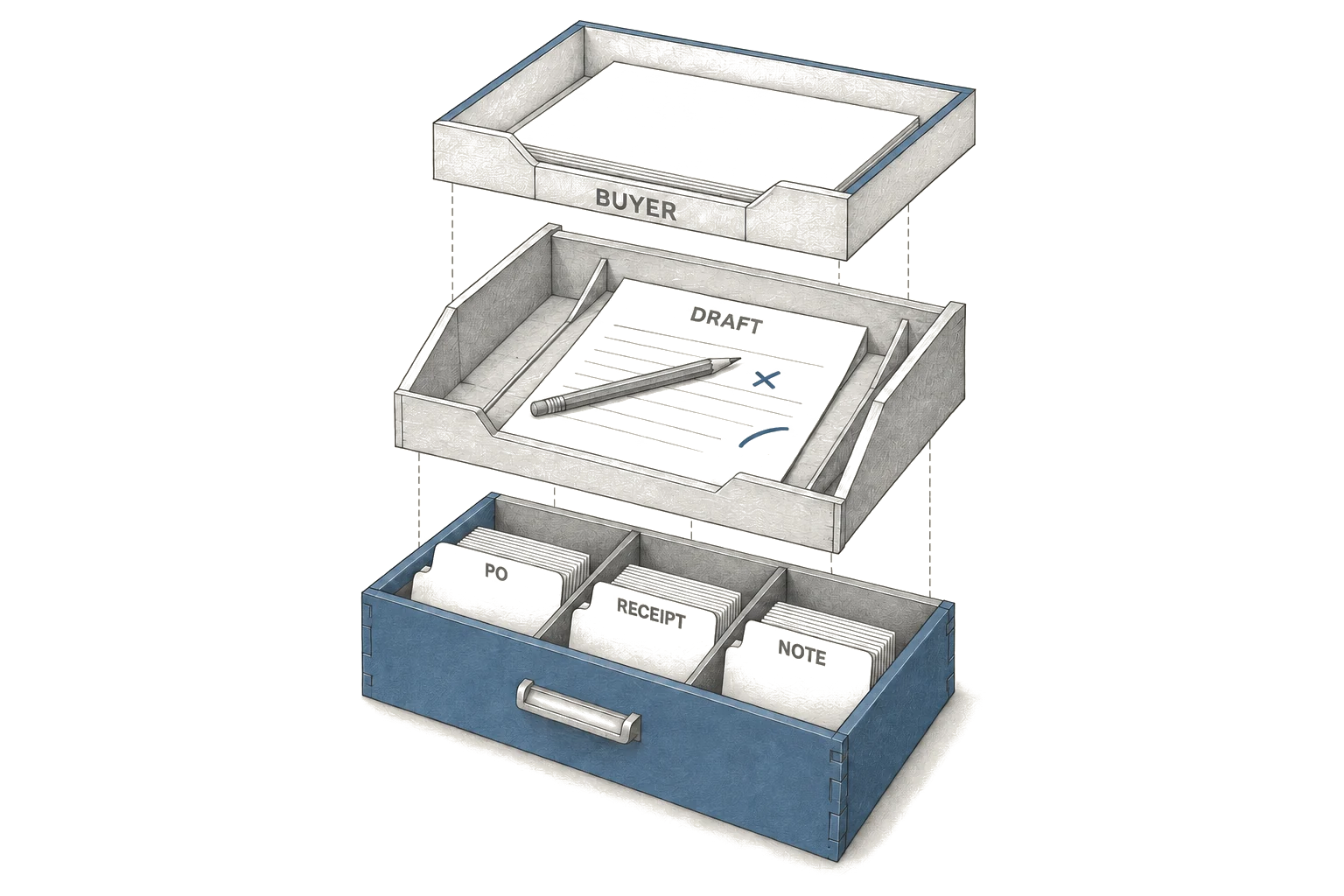
This scene is illustrative. Same dock, same goods receipt, same close of shift.
The clerk still has a pallet that does not match. The system now reads the purchase order, the goods receipt, and the last note on that vendor. It drafts a short file for the buyer. The clerk reads it. They change two lines because the packer used a house code the records do not know. They send it. The buyer still has to decide. The dispatcher still has a call at nine. The pad by the printer is gone. The miss now sits in the same record as the receipt.
The clerk's job does not vanish. The judgement does not move to a machine. What moves is the hunting. The draft is only useful if it matches how this desk actually closes a miss. That match is what the engineer is there to learn, in the room, while the shift is still running.
A language model, meaning software that drafts from your records in ordinary language, can write that file. It cannot tell you which house code the packer uses on Thursdays. The person at the dock can. The engineer who sits there can put that fact into the system before you roll it out. The engineering behind this is the same test. The system has to join the records you already run. Otherwise it is another pad by the printer.
What they actually do in a week
They do not start with a build list. They start with a shift.
They stand at the desk for a morning. They watch who gets interrupted. They note which screen is trusted and which is ignored. They sit with the leasing manager when the lease rider comes back marked up. They listen for the sentence that never makes it into a brief. They write down the cases the clerk will not let a draft touch.
Then they build in small pieces, in that operation. A draft that the clerk can reject in one click. A field that writes into the connection to your ERP, meaning the system that already holds your orders and receipts. A rule that stops the draft when the goods receipt is older than the clerk will stand behind. Each piece is tried on live work, with the person whose name is on the shift.
They work with the operator of that work. If the clerk will not use it, the team needs to understand why. An engineer following a brief without observing the workflow can miss the pad by the printer, wherever they sit. The useful test is whether the engineer can discover that gap and change the system so the desk can finish the job.
What this does not solve and what it will demand from you
This seat does not replace your IT group. It does not sign security papers. It does not move a purchase through procurement. Those doors stay yours to open, or they stay shut.
It does not remove judgement from the clerk, the dispatcher, or the leasing manager. If fixed rules can do the job reliably, compare ordinary automation with AI before choosing the approach. Use the full cost of implementation, review and maintenance. Put that person on the rulebook first.
It will demand time from the people who run the day. The engineer cannot guess the house code. Someone on the desk has to show it, more than once. It will demand access to the records the work already uses: the goods receipt, the lease rider, the evening spreadsheet. It will demand a named owner on your side who can say yes or no to a change in the week it is tried.
If you cannot spare that owner, do not start. An engineer in the building with no owner is a visitor. Visitors write briefs. They do not change the dock.
A test you can run in one meeting
You do not need an engineer in the room for this. Take thirty minutes with the person who owns the desk. Fill this in on paper.
- Name the desk and the shift. Who is on it when the miss usually appears.
- Name the document that cannot close. Goods receipt, lease rider, evening spreadsheet, or another.
- Name the person who can actually decide. Not the person who logs the ticket.
- Name the workaround in use this week. Pad, chat message, reprint, call at nine.
- Say whether a stranger could sit that shift for a day and still be allowed to try a change.
If you cannot name items 1 to 4, you are not ready to seat anyone. If item 5 is no, the seat will fail even if the engineer is good. The work is not a brief. It is a shift. The person you seat has to be allowed to stand in it.
Keep the notes. When someone later sends you a skill list, read this page instead. Ask where they will sit. Ask who they will answer to. Ask which document they will watch fail this week. If those answers are vague, you have an ordinary engineer with a new title. If those answers name your desk, you have the seat this post described.